
Intro0:00
Uh, like I said, I'm Justin, CEO and co-founder of Ionic. And at Ionic, we're on a mission to help agents interact with the economy, starting with ecommerce. Why? Uh, well, when we started working with agents, we wanted them to be able to do things for us on our behalf.
We wanted them to be able to order the Uber to the airport later today. We wanted them to be able to find the perfect gift for Mom for Mother's Day, find the best hotel for that last-minute weekend trip.
The Problem0:40
Um, and when we started working on those types of tasks and those types of problems, we quickly ran into, um, a set of issues. And what we learned is that for the last 30 years, we've built a world for ads and not for actions.
Agents, we want them to do things on our behalf, and so we need to change that paradigm. So let's give you an example of, you know, kind of what that looks like. So, um, code here on the left is the, uh, data feed for a product.
It's an ad. That ad is static. It's meant for a human to see it, a human to click on it, go somewhere else, maybe go somewhere else after that, learn some more, come back, and make a transaction happen.
Future Vision1:16
Um, I don't know about you, but I don't need my agent bouncing from site to site to do things. For me, I want it to all happen in one place. Uh, and so what does that mean? Well, it means in the future, I want my agent to know that I don't wear an extra-large shirt.
I wear a shirt that's measured 21 inches from the top to the bottom. That I don't need a cotton blend. I need 7% modal. I need a certain percentage of cotton. Right? And so those are the types of things that we can have our agents do.
But where we're starting today, these ad feeds on the left, they don't even know if a product is in stock. They don't know the shipping. They're static. They're not dynamic. So what are we doing? Um, we're building an ecosystem where we have partnerships with hundreds of merchants.
Data Enrichment1:40
Uh, they give us access to that product feed that they have. And then we are using an agentic workflow to enrich that data. With the loop here on the bottom, we're taking editorial product reviews, anything else that we need or that your agent will find interesting, and putting that all in one place.
Importantly, it's in the format that an agent wants to see, whether that's a relational database, a vector store, a graphical database. We'll continue to grow and, and work with everyone here as, as, uh, we continue to progress on, on how that data should be accessed.
That's in all access via our API. That API is live today and is usable by anyone in this room. Um, but after we have the data in theright place to make a decision, we then, again, like I said, we don't need to be bouncing around.
Transactions2:43
We want that transaction to happen, that action to happenright in the same layer. And so from here, you can see this example of me potentially finding headphones for my flight later today. Um, and once we've made that decision, my agents worked with me on my behalf, we can just say, "Yeah, I want to check out."
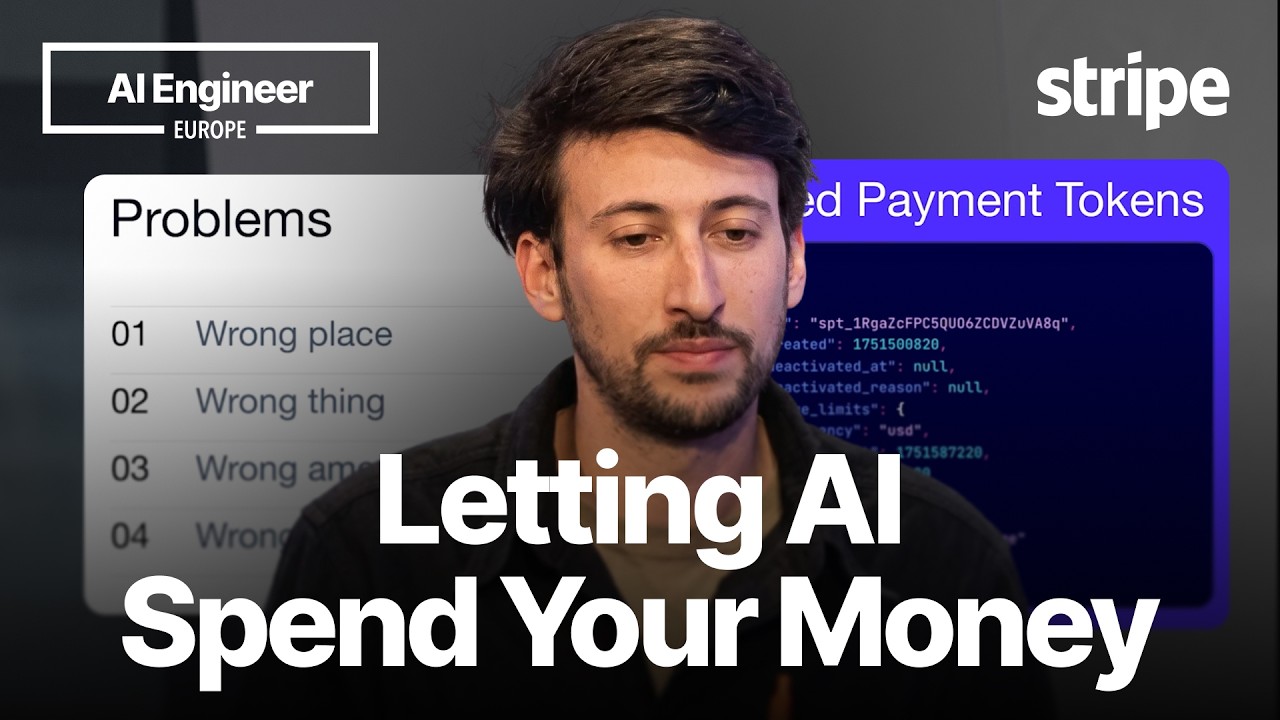
And the payment token can come through, and we can complete the transaction immediately. That's the way it should be. Agents should be able to do all these things in one simple step. Um, okay. So we talked about better decisions.
We talked about better actions. The last part, the secret, we'll talk about better monetization. Um, okay. So consumer AI products. I think I saw this tweet on the left the, the week I signed up for my fourth Pro subscription of the month.
Monetization3:13
And it just really resonated with me that we're not going to be able to charge consumers for our AI products a $20 a month subscription fee forever. It'll work for the early adopters, but it's not mass market. Um, the secret is that merchants will pay everyone in this room to help them find theright consumer, um, and match them to the best products.
We're starting with ecommerce today. Again, like I said, eventually that'll be hotel rooms, it'll be flights, it'll be everything. But, um, you know, I'll give you an example. We've seen some cool demos out there where people are sending agents out.
They go and they buy something on Amazon, and we all, like, clap, and we repost it on Twitter and like, "Yes, that is cool." But for that merchant on the other side of the transaction, they're just paying Amazon.
And they're getting Amazon's taking all the credit. And so if we're going through the process of enriching a data feed and we're helping agents understand what consumers want, and we're making better decisions happen and transactions happen, instead of a merchant getting a "Yes, you checked out" from Amazon, and that being the end of the day, they know what data was going out into the world, what models saw it, how they used it, what the action flow was, and the transaction took place.
And then they're able to understand from that customer the ongoing relationship. And they're willing to pay for that, and they'd rather pay you for that than Amazon. Um, side note, Amazon will also pay you as well, just not as much.
Get Started4:44
Um, okay. And so to get that started, we've created relationships with hundreds of merchants. Um, you can, can work with them immediately today. Uh, we've got a catalog that's already enabled with millions of SKUs. Like I said, it's AI native and it keeps growing.
Um, we're hiring. If you want to work with us, it's Justin or Owen at Ionic Commerce. If you want to get started, check out the docs. It's docs.ioniccommerce.com. Thank you.