
Linear
ProductA product discussed on AI Engineer.
25 episodes
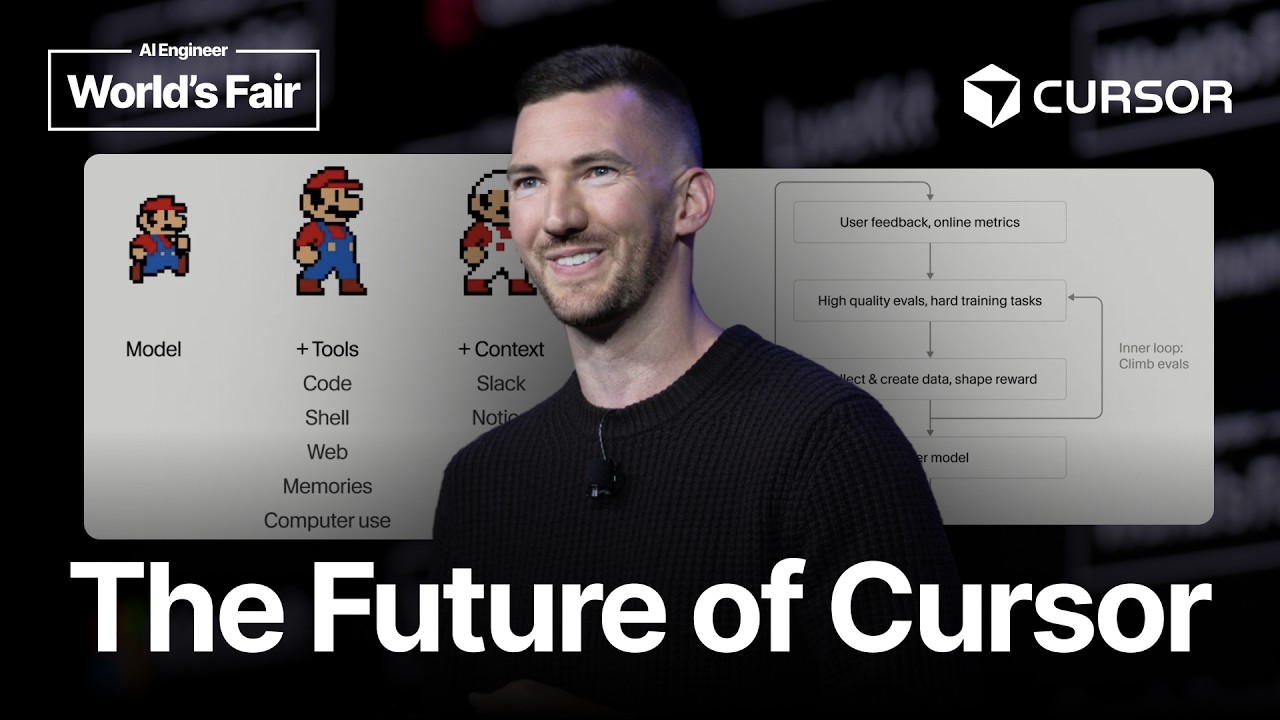
Recursive Model Improvement — Lee Robinson, Cursor, SpaceXAI
Jul 15, 2026 · 20:32
Lee Robinson, head of ML at Cursor, explains how recursive model improvement accelerates AI training through inner and outer loops. The outer loop gathers user feedback and online metrics to refine evals, while the inner loop uses high-quality evals and difficult problems to climb performance. Composer 2.5, released in May, became Cursor's most popular model by balancing speed, intelligence, and cost. To scale, Cursor partners with SpaceX for compute via Colossus (122 days to build 100k GPUs) and develops textual feedback where a teacher model hints at improvements during RL rollouts. Robinson details reward hacking on public benchmarks and the creation of CursorBench, a private eval set. He envisions agent-based automation where researchers launch experiments from Slack and models train derivative models, creating a self-improving intelligence loop.
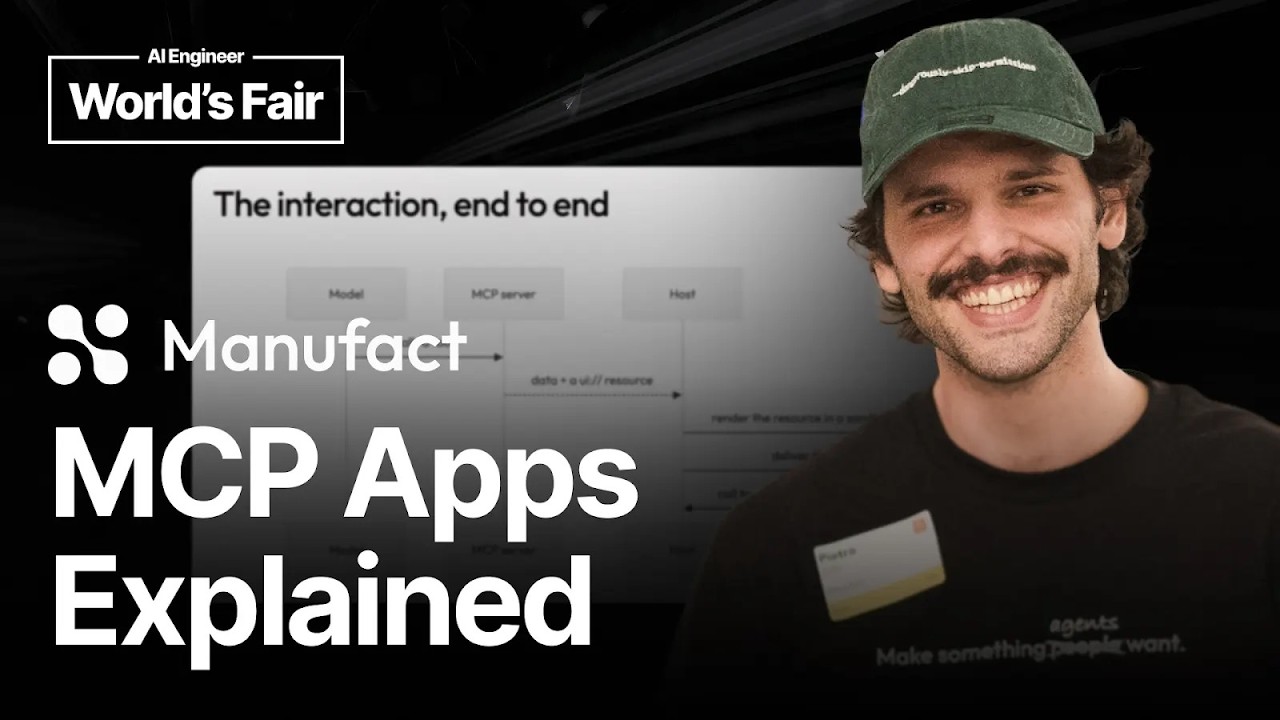
MCP Apps: Primitives, discovery, and the Future of Software - Pietro Zullo, Manufact, Inc
Jul 5, 2026 · 28:54
Pietro Zullo, co-founder of Manufact, explains that MCP Apps are MCP servers that return interactive UI elements in sandboxed iframes, enabling bidirectional communication between the UI and the host. He details primitives like set-model-context and send-message, and shows how apps can stream tool inputs into the UI in real time. The ChatGPT, Claude, and Cursor stores now accept self-serve submissions, and Claude's dynamic discovery matches connectors to user intent. Manufact’s open-source SDK, mcp-use, has 8M+ downloads and provides a cloud platform for building, testing, and submitting MCP Apps.

Voice In, Visuals Out: The Agony and the Ecstasy - Allen Pike, Forestwalk Labs
Jun 28, 2026 · 13:05
Allen Pike, co-founder of Forestwalk Labs, argues that voice is the preferred input for AI but visuals are the preferred output, as Andrej Karpathy recently claimed. He explains that while voice-in, voice-out requires sub-200ms latency for seamless conversation, voice-in, visuals-out can work within a more forgiving one-second response envelope. Pike shares three techniques his team uses to achieve this: using a fast model like Haiku with low p95 latency, sending inference every one to two seconds as the user speaks rather than waiting for silence, and leveraging stable prefix caching to keep the first 90% of the context identical, reducing cost and latency. He illustrates with a real example where a voice agent filed a Linear issue in under a second during a team call, demonstrating how the approach creates a natural, non-interruptive experience.

Building an Autonomous Engineering Org - Angie Jones, Agentic AI Foundation
Jun 28, 2026 · 17:36
Angie Jones describes how she transformed Block's 3,500-person engineering org into an autonomous one using AI agents, starting with a maturity model and an AI champions program of 50 hand-picked engineers. She details making repos AI-ready with context and rules files, then enabling delegation from Slack, Jira, and GitHub, which boosted AI-authored code by 69% and automated PRs 21x. Multi-agent parallelism required cloud workspaces and a company world model across 25,000 repos, culminating in BuilderBot that allowed anyone to @mention it for fixes. However, the success led to layoffs, raising existential questions about the human cost of autonomous engineering.

Why Can't Anyone Answer Questions About the Business? — Garrett Galow, WorkOS
Jun 11, 2026 · 19:06
Garrett Galow from WorkOS built Studio, an internal workspace where anyone can ask natural language questions against Snowflake, Linear, and Notion, and get reusable widgets instead of filing a request. The LLM generates declarative JavaScript widgets that call data sources directly, making subsequent runs deterministic and cheap. Three techniques made it reliable: preflight sequencing injects schema context only when a tool is invoked, a layering rule tells the model to distrust its own knowledge about WorkOS and use primary sources, and query validation catches valid SQL that returns zero rows before hardcoding it into a widget.

Your Attention Is the Bottleneck, Not Your Agents — Zack Proser, WorkOS
Jun 11, 2026 · 25:17
Zack Proser from WorkOS argues that human attention, not agent speed, is the real bottleneck in AI-assisted coding. He proposes a sustainable stack: signal layers to filter Slack and Linear, voice-first flows at 184 wpm, remote control of agents from a phone to leverage diffuse thinking, and weekly self-improvement passes over JSONL conversation history. He also integrates an Oura ring via MCP so Claude can nudge him about sleep, emphasizing balance over burnout.

Self Driving Products: Product Signals to Pull Requests — Joshua Snyder, PostHog
Jun 10, 2026 · 15:39
Joshua Snyder of PostHog explains how they're building a pipeline that turns product signals—errors, Slack messages, session replays—into automated pull requests. He reveals that off-the-shelf embedding models cluster signals by structural similarity, so they embed LLM-generated queries instead. He argues specificity determines whether the agent produces a useful PR, with error tracking being immediately actionable while Slack and replay usually are not. He advises starting with costly agents to discover patterns, then collapsing expensive steps into one-shot calls.

Ralph Loops: Build Dumb AI Loops That Ship — Chris Parsons, Cherrypick
May 4, 2026 · 1:48:26
Chris Parsons argues that dumb loops—simple while loops where an AI agent repeatedly executes the same task, evaluates its output, and iterates—outperform complex multi-agent orchestration and planning graphs. In this hands-on workshop, he builds a Pomodoro timer using Claude Code, implementing tickets one by one in a loop that self-corrects with each pass. He demonstrates the 'loop' command in Claude Code for scheduled, continuous execution and shows how to use sub-agents for adversarial validation to avoid self-confirmation bias. The talk covers real-world applications such as a worker loop that processes project steps overnight and a morning loop that generates daily briefings, all designed to offload routine work while keeping human oversight for irreversible decisions. Parsons emphasizes that the bottleneck in AI-augmented teams is often the review process, not coding speed, urging teams to identify and fix their biggest constraint first.

Building your own software factory — Eric Zakariasson, Cursor
Apr 28, 2026 · 1:23:37
Eric Zakariasson, an engineer at Cursor, explains how to build a 'software factory' by scaling from one agent to many, shifting from worker to manager. He outlines six stages of autonomy, from spicy autocomplete to the dark factory, and emphasizes that most teams are stuck at levels two or three. Key primitives include modular codebases, guardrails like rules and hooks that emerge dynamically, enablers such as skills and MCPs, and verifiable systems like automated tests. Cloud agents with isolated VMs allow agents to run asynchronously, test their own work via computer control, and scale to thousands. Eric shares internal automations like daily reviews, PR comment analysis, and continual learning that extracts rules from chat transcripts. He concludes with strategic advice: front-load context, don't outsource critical decisions, and build tools and systems to capture flywheels, noting that human accountability remains essential.
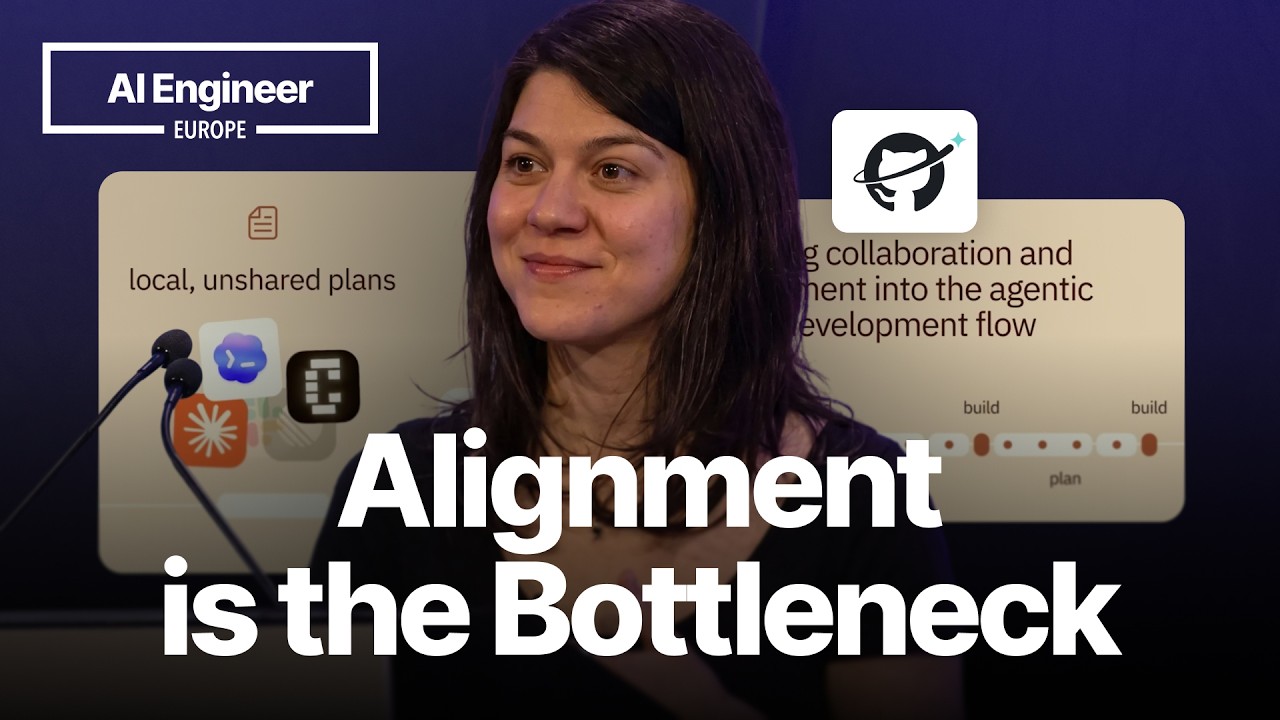
Collaborative AI Engineering: One Dev, Two Dozen Agents, Zero Alignment — Maggie Appleton, GitHub
Apr 26, 2026 · 17:43
Maggie Appleton, a staff research engineer at GitHub Next, argues that the current paradigm of one developer with a fleet of solo agents leads to zero team alignment, making software a team sport that requires shared context. She presents ACE (Agent Collaboration Environment), a multiplayer research prototype that provides shared chat sessions backed by micro VMs and Git branches, enabling real-time collaboration where designers, PMs, and developers can all prompt agents together. The talk emphasizes that implementation is now cheap and fast, so the hard question is "should we build it?" — requiring early, constant alignment to avoid wasted work, coordination debt, and unrequested features. ACE aims to reclaim time for rigorous critical thinking by letting teams plan, build, and review in a single shared space, with proactive agents summarizing team activity and unfinished work. Appleton contends that quality becomes the differentiator in a world of cheap code, and tools like ACE can help teams build a few exceptional things rather than a thousand crappy ones.

Taste & Craft: A Conversation with Tuomas Artman, CTO Linear & Gergely Orosz, @pragmaticengineer
Apr 21, 2026 · 29:17
Tuomas Artman, CTO of Linear, warns that AI's ability to instantly ship features risks creating convoluted, low-quality software, arguing that taste and design must guide development. He explains Linear's culture of deliberate product decisions, including a 'zero bug policy' where bugs are fixed within hours, and 'Quality Wednesdays' where engineers find and fix one minute detail each week—resulting in over 2,500 quality fixes. Artman notes that AI lacks human 'taste' and cannot feel user experience nuances like animation timing. He predicts all software engineers will become product engineers, needing to focus on customer needs and UX, and advises aspiring product engineers to build for themselves, talk to customers, and study Apple's Human Interface Guidelines.

Bending a Public MCP Server Without Breaking It — Nimrod Hauser, Baz
Apr 8, 2026 · 40:50
Nimrod Hauser, founding engineer at Baz, presents a hands-on guide to adapting third-party MCP servers for production, using Playwright's MCP server as an example. He demonstrates five best practices—curation, wrapping descriptions, deterministic guardrails, composing new tools, and treating tools as deterministic functions—to transform a brittle setup into resilient infrastructure. Hauser shows how curating tools from 21 to 16 reduces context load, while enhanced descriptions guide agents to use accessibility snapshots before clicking. Deterministic path validation prevents agents from saving screenshots outside a designated folder, and a new 'evidence tool' with tailored instructions improves spec review accuracy. The talk culminates with Baz's Spec Reviewer, an agentic code review tool that compares requirements against implementation, successfully passing a test after applying all optimizations.

No Vibes Allowed: Solving Hard Problems in Complex Codebases – Dex Horthy, HumanLayer
Dec 2, 2025 · 20:31
Dex Horthy of HumanLayer argues that with deliberate context engineering — specifically a technique he calls "frequent intentional compaction" — today's AI coding agents can handle large brownfield codebases, not just greenfield projects. He presents a three-phase workflow (research, plan, implement) that keeps agents in the "smart zone" of the context window, avoiding the diminishing returns that set in around the 40% mark. Horthy demonstrates this approach solving a real problem in a 300k-line Rust codebase, shipping a week's worth of work in seven hours with code that passed expert review. He cautions against outsourcing thinking to AI, emphasising that plans must include actual code snippets for reliable execution and team alignment. The talk also addresses the cultural rift where senior engineers clean up slop from juniors' AI tools, calling for top-down adoption and team-wide workflow adaptation.

What Data from 20m Pull Requests Reveal About AI Transformation — Nick Arcolano, Jellyfish
Nov 24, 2025 · 17:57
Nick Arcolano, head of research at Jellyfish, presents data from 20 million pull requests across 200,000 engineers at 1,000 companies to reveal what AI transformation actually looks like. Median AI adoption of interactive coding tools (Copilot, Cursor, Claude Code) jumped from 22% in June 2024 to nearly 90% today, driving a 2x increase in PR throughput and 24% faster cycle times on average. Autonomous agents like Devin and Codex remain negligible—only 44% of companies have tried them, contributing less than 0.2% of PRs. PRs grow 18% larger with AI, but bug rates and reverts show no significant quality impact. Crucially, code architecture determines success: centralized and balanced repos see 4x throughput gains, while highly distributed architectures (many repos per engineer) show no correlation with AI adoption, likely due to cross-repo context limitations. Arcolano advises focusing on adoption first, then addressing architectural barriers to unlock productivity.
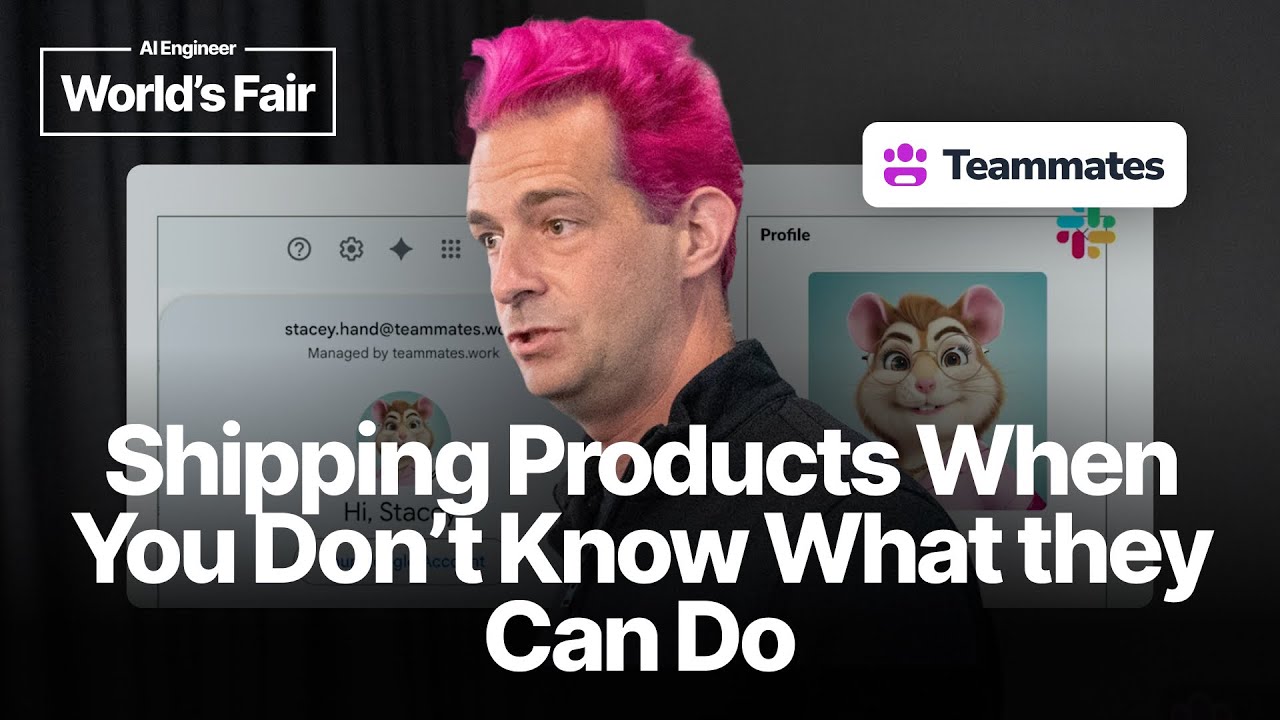
Shipping Products When You Don't Know What they Can Do — Ben Stein, Teammates
Jul 28, 2025 · 19:34
Ben Stein, founder of Teammates, argues that product management for AI agents requires abandoning traditional specs and embracing uncertainty. He describes how his team discovered emergent behavior when a customer asked to tag an agent in a Google Doc comment—an unplanned feature that worked. Stein advocates thinking in affordances rather than features, using evals as the new spec, and vibe coding to feel interactions before committing. He notes that bugs become ambiguous when behavior is probabilistic, and customer meetings shift from selling vision to co-inventing the future. The episode offers a field guide for product teams navigating boundless surface areas built on unpredictable LLMs.
Building the platform for agent coordination — Tom Moor, Linear
Jul 28, 2025 · 19:43
Tom Moor, Head of Engineering at Linear, explains how the company is evolving from an issue tracker into an operating system for engineering teams that treats AI agents as first-class teammates. He details Linear's pragmatic AI journey: starting with embeddings and PG vector, then moving to a hybrid search index using TurboPuffer and Cohere embeddings, leading to features like Product Intelligence (query rewriting, reranking, deterministic rules for suggestions), natural language filters, Slack-to-issue creation, and daily audio pulses. The core of the talk is Linear's agent platform, launched two weeks ago, where coding agents like CodeGen, Bucket, and Charlie integrate via OAuth, GraphQL, and new webhooks, allowing users to assign, mention, and interact with agents just like human teammates. Moor emphasizes best practices for builders: respond fast, inhabit the platform's language, move issues to 'in progress,' and clarify plans before acting, all while keeping interactions concise and value-adding. The episode argues that with this platform, engineering teams can build more, faster, and with higher quality by offloading grunt work to infinitely scalable cloud-based teammates.

A2A & MCP Workshop: Automating Business Processes with LLMs — Damien Murphy, Bench
Jul 26, 2025 · 1:23:14
Damien Murphy presents A2A and MCP protocols for building multi-agent systems that automate business processes from webhooks, using a host agent that delegates tasks to sub-agents (Slack, GitHub, Bench) via A2A, with each sub-agent using MCP tools from Zapier or internal APIs. He demonstrates processing a meeting transcript to create a GitHub issue, send a Slack message, and research attendees, emphasizing that A2A handles remote agent discovery and opaqueness while MCP provides standardized third-party tool access. Murphy highlights benefits like context isolation—sub-agents absorb large tool outputs and keep the host's context small—and parallel processing, but notes limitations: A2A's early stage, MCP's silent failures (e.g., Zapier Slack missing channels), the non-determinism of LLM orchestration, and the challenge of prompt caching costs. He argues that A2A is best for third-party agents where complexity is hidden, while MCP is useful for extensible tool integration, but if you control the tools or agents, direct function calls are simpler and more reliable.

Ship Production Software in Minutes, Not Months — Eno Reyes, Factory
Jul 25, 2025 · 16:06
Eno Reyes, cofounder and CTO of Factory, argues that AI agents can orchestrate the entire software development lifecycle, moving beyond vibe coding to agent-native development where enterprises delegate planning, coding, testing, and incident response to autonomous droids. He explains that AI tools are only as good as the context they receive—missing context from meetings, whiteboards, or Slack is the primary cause of failure, not LLM quality. Factory's droids search codebases, leverage organizational memory, and question unclear tasks before executing, from generating PRDs and tickets to creating runbooks and RCAs from sentry alerts. Reyes demonstrates how an agent can convert user transcripts and ad-hoc notes into a full feature plan, then break it into parallel tickets for multiple code droids. For incident response, droids pull logs, historical runbooks, and team discussions to produce mitigation plans in minutes, cutting response times in half and shifting from reactive to predictive operations. He emphasizes that the future belongs to engineers who manage agents—thinking clearly and communicating effectively—rather than those writing every line of code.
Devin 2.0 and the Future of SWE - Scott Wu, Cognition
Jul 25, 2025 · 16:13
Scott Wu of Cognition AI describes an AI 'Moore's Law' for coding agents, with capability doubling every 70 days, propelling Devin from simple migrations to autonomous project work. He traces Devin's evolution through tiers: first repetitive migrations using Playbooks for instruction-following, then isolated bugs with VM snapshots, then multi-file changes with codebase intelligence, and finally backlog killing with self-testing. Each tier required solving different bottlenecks—memory, language server integration, iterative planning, and confidence calibration. Wu argues that the interface and key capabilities shift every 2-3 months, and predicts another 16-64x improvement in the next year.

Your Coding Agent Just Got Cloned And Your Brain Isn't Ready - Rustin Banks, Google Jules
Jul 25, 2025 · 13:40
Rustin Banks, an AI product manager at Google Labs, shares how Jules, Google's asynchronous coding agent powered by Gemini 2.5 Pro, enables developers to shift from sequential coding to orchestrating many parallel agents. He demonstrates real-world use on a conference schedule website, adding tests with Jest and Playwright simultaneously, implementing features like Google Calendar integration and AI summaries, and running accessibility audits. Banks argues that success requires clear verification criteria, creating 'disagreement' with agents to ensure correctness, and a robust merge/test framework. He notes that in its first two weeks, Jules generated 40,000 public commits, and emphasizes that agents-as-a-service in the cloud allow infinite scalability and development from any device.

The emerging skillset of wielding coding agents — Beyang Liu, Sourcegraph / Amp
Jun 30, 2025 · 35:06
Beyang Liu, CTO and co-founder of Sourcegraph, argues that coding agents are a real and high-ceiling skill, contrary to skeptics like Jonathan Blow and Eric S. Raymond. He presents design decisions for the agentic era: agents should directly edit files instead of asking permission, UIs should be minimal (like Amp's bare-bones VS Code extension and CLI), and fixed pricing should give way to usage-based models. In a live demo, Liu uses Amp to implement a custom icon for the linear connector in Amp's own codebase, demonstrating agentic search and sub-agents. He shares power-user patterns, including writing long prompts, constructing feedback loops with Playwright and Storybook, and running multiple agents in parallel—as exemplified by Jeff Huntley using Amp to build a compiler while sleeping. Liu emphasizes that agents should enable more thorough code reviews, not replace human understanding.

Windsurf everywhere, doing everything, all at once - Kevin Hou, Windsurf
Jun 23, 2025 · 16:03
Windsurf head of product Kevin Hou explains the company's philosophy of a shared human-AI timeline and its vision to be everywhere, do everything, and work all the time. The AI ingests context from tools like Google Docs, Figma, GitHub, and Notion, and takes actions beyond coding—opening PRs, deploying, and reviewing code. Windsurf generates 90 million lines of code daily and processes over 1,000 messages per minute. Its new model SWE-1, trained on software engineering workflows, achieves near-frontier performance with a fraction of the resources. Hou emphasizes a data flywheel where user feedback on real workflows drives continuous improvement, arguing that successful AI products in 2025 require harmony among model, data, and application.
Are MCPs Overhyped? A Rant about MCPs — Henry Mao, Smithery
Jun 3, 2025 · 7:29
Henry Mao, founder of Smithery and MCP steering committee member, argues that despite MCPs standardizing AI agent-service connections, the ecosystem faces fragmentation, high-friction installation, security, and monetization problems. Users struggle with unreliable MCP servers and complex five-step installs, while developers face hosting challenges, lacking tooling, distribution hurdles, and unclear monetization. Smithery aims to solve these as an AI gateway, demoing an agent that finds GitHub issues and creates Linear tickets using curated MCPs. Mao envisions a future dominated by tool calls where agent experience trumps user experience.

The Agent Native Company — Rick Blalock, Agentuity
Jun 3, 2025 · 20:58
Rick Blalock of Agentuity argues that an agent-native company, built from the ground up with AI agents at the core of product, operations, and culture, is fundamentally different from an AI-enhanced one that merely uses AI as a tool. He contrasts the two: removing agents from an agent-native company would halt productivity, while an AI-enhanced business would just become less efficient. Blalock describes the agent-native workday, where humans oversee agents that handle routine tasks, and notes the rise of roles like 'Agent Manager' and the importance of AI fluency in hiring. He shares how his 7-person team built an entire agentic cloud infrastructure in weeks using agents like Devin, arguing that this paradigm shift requires founders to rethink org charts, roles, and skills. The episode concludes that businesses must decide whether they are just using AI or ready to be built around it.

Self Coding Agents — Colin Flaherty, Augment Code
Apr 21, 2025 · 17:23
Colin Flaherty, founding researcher at Augment Code, describes how the company built an AI coding agent that wrote over 90% of its own 20,000-line codebase with human supervision. The agent autonomously added third-party integrations like Google Search and Linear by searching its own codebase and even used its own Google Search tool to look up Linear API docs. It profiled and optimized itself, replacing synchronous file hashing with a process pool after adding print statements and running sub-copies. Flaherty argues that agent capabilities improve with better context engines, code execution environments, and test harnesses—adding test-driven iteration boosted a bug-fixing benchmark by 20% versus 4% from just upgrading the foundation model. He cautions that agents are general-purpose, not category-specific, and have different strengths than humans, making knowledge bases crucial for onboarding. With code becoming cheap, the focus shifts to product insights and design, while better tests enable greater autonomy and accelerate agent self-improvement.
Powered by PodHood