
Lambda
ProductA product discussed on AI Engineer.
8 episodes
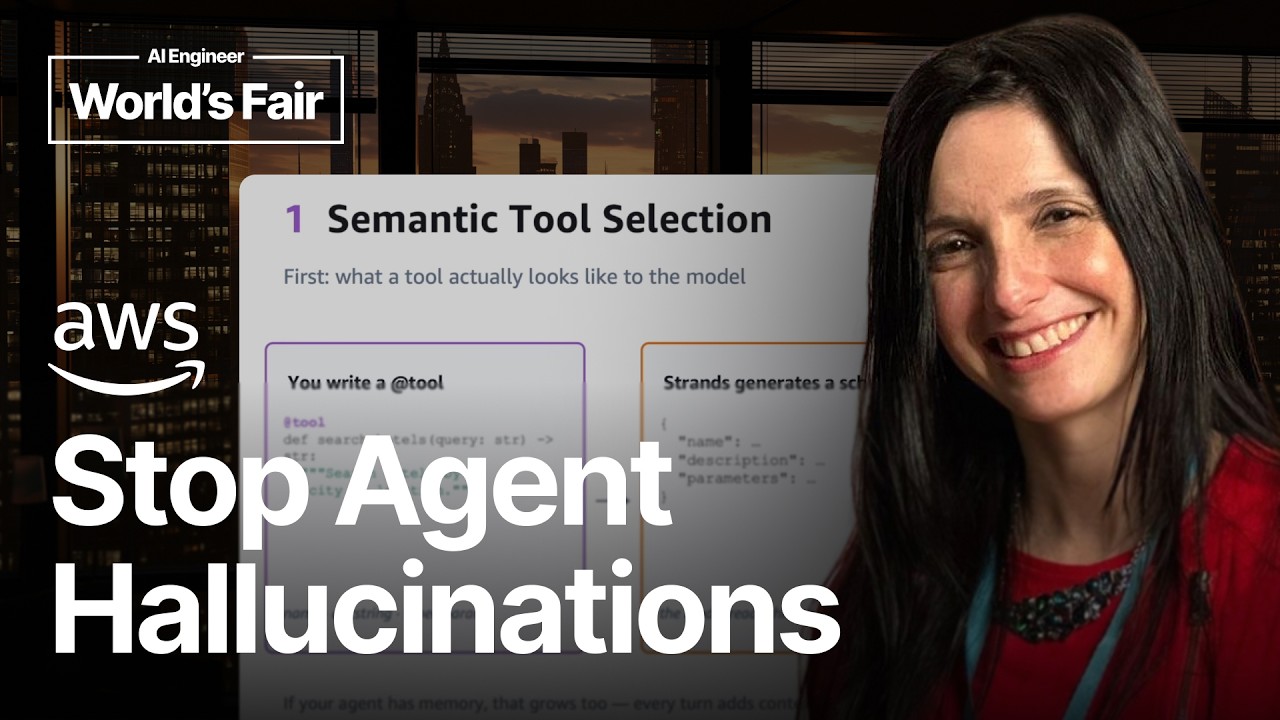
Stop AI Agent Hallucinations: 5 Techniques + Production Patterns - Elizabeth Fuentes, AWS
Jul 11, 2026 · 55:19
Elizabeth Fuentes (AWS) presents five code-based techniques to stop AI agent hallucinations, each with measurable before/after metrics. Semantic Tool Selection filters 29 tools to the 3 most relevant per query, cutting token usage from thousands to under 300 per call. Graph-RAG replaces vector similarity with structured graph queries (using Neo4j), enabling precise aggregation and multi-hop reasoning that vanilla RAG fabricates. Multi-Agent Validation uses an Executor-Validator-Critic swarm to catch fabrications, achieving a 92% detection rate. Neurosymbolic Guardrails enforce business rules in Python hooks that the agent cannot skip, achieving zero rule violations. Agent Steering guides agents to self-correct when soft rules fire, completing tasks without hard failures—demonstrated by booking 50 guests by intelligently splitting into two rooms.
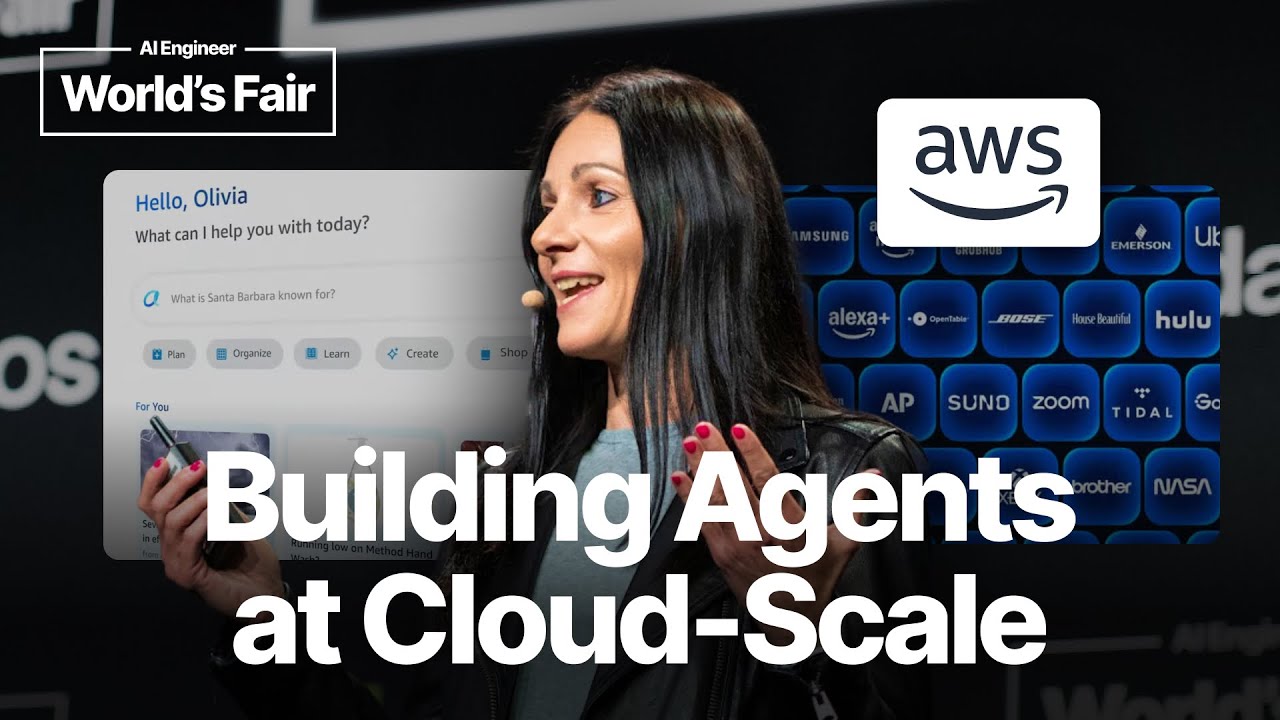
Building Agents at Cloud Scale — Antje Barth, AWS
Aug 2, 2025 · 19:00
AWS Principal Developer Advocate Antje Barth demonstrates how to build and scale AI agents using cloud-native patterns, arguing that specialized agents will reinvent customer experiences. She showcases Alexa Plus, which orchestrates hundreds of expert systems across 600M+ devices and tens of thousands of services, and the Amazon Q Developer CLI agent, shipped in just three weeks. Barth introduces Strands Agents, an open-source Python SDK for building production-ready agents that supports multiple model providers (Claude, Llama, OpenAI) and over 20 prebuilt tools including memory, RAG, and multi-agent workflows. She demonstrates integrating MCP servers via Lambda with DynamoDB for session storage, and previews upcoming A2A protocol support and a future of personal agents connecting to agent stores.

RL for Autonomous Coding — Aakanksha Chowdhery, Reflection.ai
Jul 16, 2025 · 19:27
Aakanksha Chowdhery, CEO of Reflection AI and former lead researcher on PaLM and Gemini at Google, argues that reinforcement learning (RL) scaling is the next frontier for autonomous coding agents. She explains that inference-time techniques like majority voting and self-revision improve accuracy but require many samples (e.g., 10,000 for rare correct generations). RL training can learn to generate correct outputs directly, especially in verifiable domains like code with unit tests. Reflection AI aims to build superintelligence starting with autonomous coding, leveraging automated verification to design better reward functions. She notes challenges in scaling RL, including system complexity and reward hacking, but sees coding as ideal due to execution feedback.
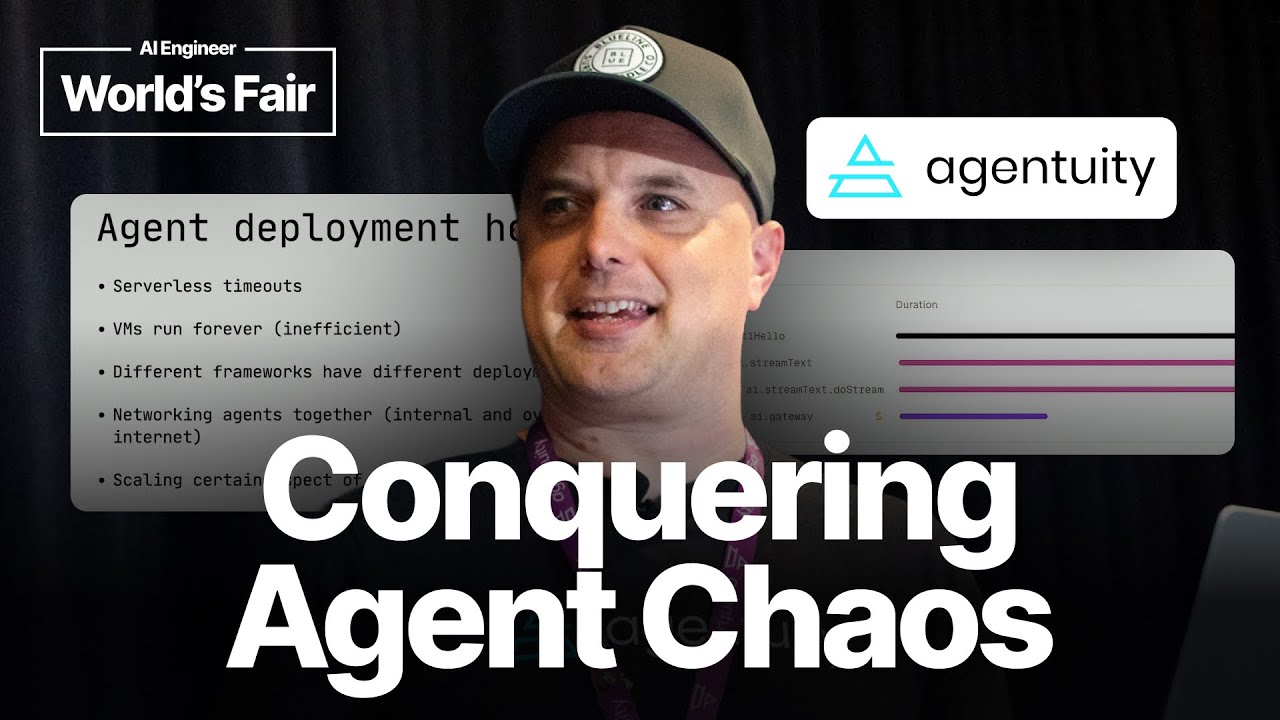
Conquering Agent Chaos — Rick Blalock, Agentuity
Jul 1, 2025 · 14:40
Rick Blalock, founder of Agentuity, argues that deploying AI agents remains the number one headache for developers, citing common issues like serverless timeouts (agents running 15–30 minutes), statelessness, and networking complexities. He demonstrates Agentuity’s platform, which treats agents as first-class infrastructure citizens: users scaffold projects via a CLI (supporting Bun, Python/UV, Node.js), write a simple request handler, and deploy with automatic routing, tunneling, and a built-in AI gateway that tracks costs per run. The platform decouples inputs and outputs—agents can be triggered via email, SMS, webhooks, or cron—and provides human and agent-facing telemetry via OTel tracing. Blalock notes Agentuity already hosts 50–60 internal agents and is building infrastructure agents to replace tools like PagerDuty, with plans to add Slack/Discord integrations and service-level reasoning capabilities.
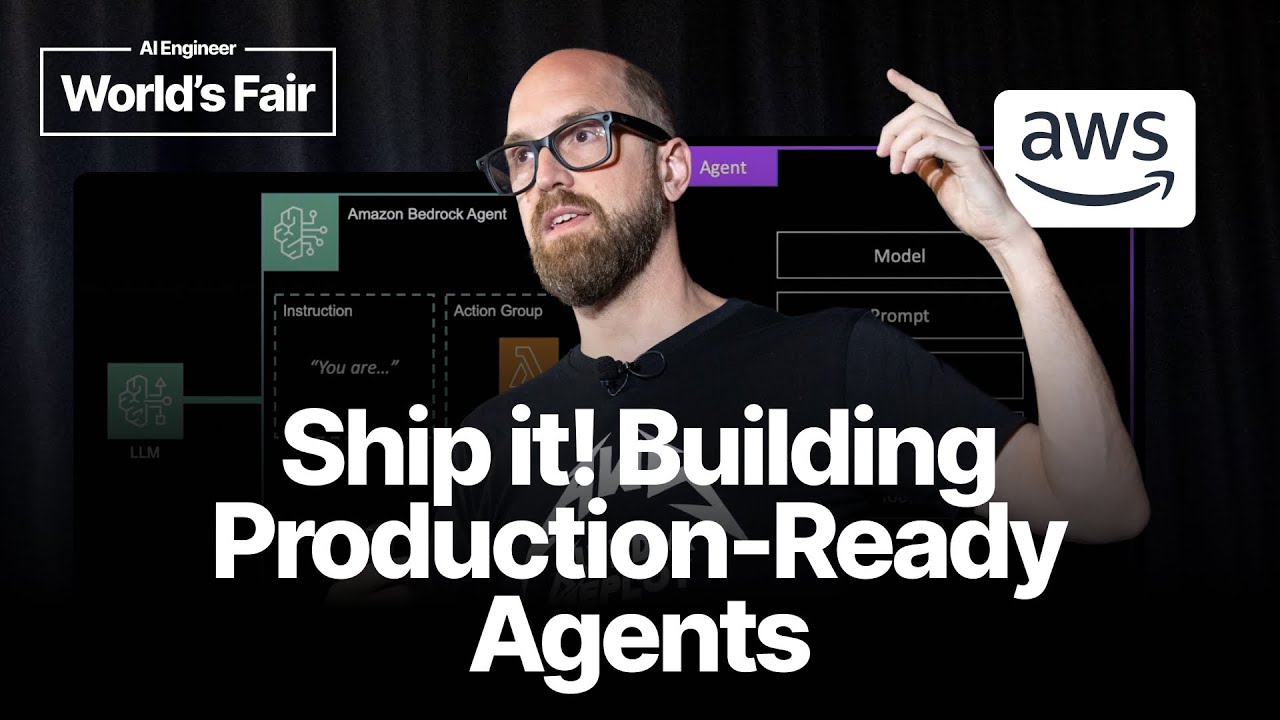
Ship it! Building Production Ready Agents — Mike Chambers, AWS
Jun 27, 2025 · 19:37
Mike Chambers, a developer advocate at AWS, demonstrates how to take a simple local agent—built with a Llama 3.1 8B model and a dice-rolling tool—and ship it to production at cloud scale using Amazon Bedrock Agents. He breaks down the essential components of an agent: model, prompt, loop, history, and tools. Then he live-deploys the agent with Bedrock Agents, configuring instructions and an action group wired to an AWS Lambda function that handles the dice roll. The fully managed service automates scaling, infrastructure, and the agentic loop. Chambers also highlights free courses on DeepLearning.AI and invites attendees to discuss MCP servers and the new open-source SDK for model-first agents.
Introducing Strands Agents, an Open Source AI Agents SDK — Suman Debnath, AWS
Jun 27, 2025 · 14:26
Suman Debnath, a Principal ML Advocate at AWS, introduces Strands Agents, an open-source SDK that simplifies AI agent creation by requiring only a model and tools, eliminating scaffolding. He demonstrates building an agent in a few lines of code to read, summarize, and speak a file, using default tools. Another demo integrates Strands with an MCP server to generate animated math videos via Manim, requiring no system prompts—the model reasons autonomously. Custom tools can be created by decorating functions. Strands supports any model via LiteLLM or Bedrock, and is available at strandsagent.com with a GitHub repository for contributions.

Supercharging developer workflow with Amazon Q Developer - Vikash Agrawal
Jun 10, 2025 · 13:22
Vikash Agrawal and Linda show how Amazon Q Developer can drive every stage of the software development lifecycle. They build a 2048 game with FastAPI and Poetry using Q's /dev command in the CLI, then add unit tests with /test, generate documentation with /doc, and integrate with GitHub for automated pull requests. After deploying to AWS, they use Q in CloudWatch to debug a runtime import error by analyzing logs and resource topology. The episode emphasizes that planning infrastructure and prompts upfront, along with security scans, are critical for production-ready AI-assisted development.

Claude plays Minecraft!
Feb 15, 2025 · 18:16
Derek from AWS demonstrates building Rocky, an autonomous Minecraft agent using Amazon Bedrock, Claude 3 Haiku, and serverless AWS services, proving agentic workflows enable AI to reason and act beyond chatbots. He explains the architecture: Minecraft server on ECS with Mineflare bot framework, agents for Bedrock with return of control, and prompt engineering for tasks like digging and building. In a live demo, Rocky jumps, finds players, digs a hole, and builds a double-decker couch from a chat command, inferring parameters from natural language. The code is open-source and built with CDK/CloudFormation, emphasizing that agentic AI can operate in complex 3D environments through tool orchestration and managed prompt design.
Powered by PodHood