
EC2
ProductA product discussed on AI Engineer.
3 episodes
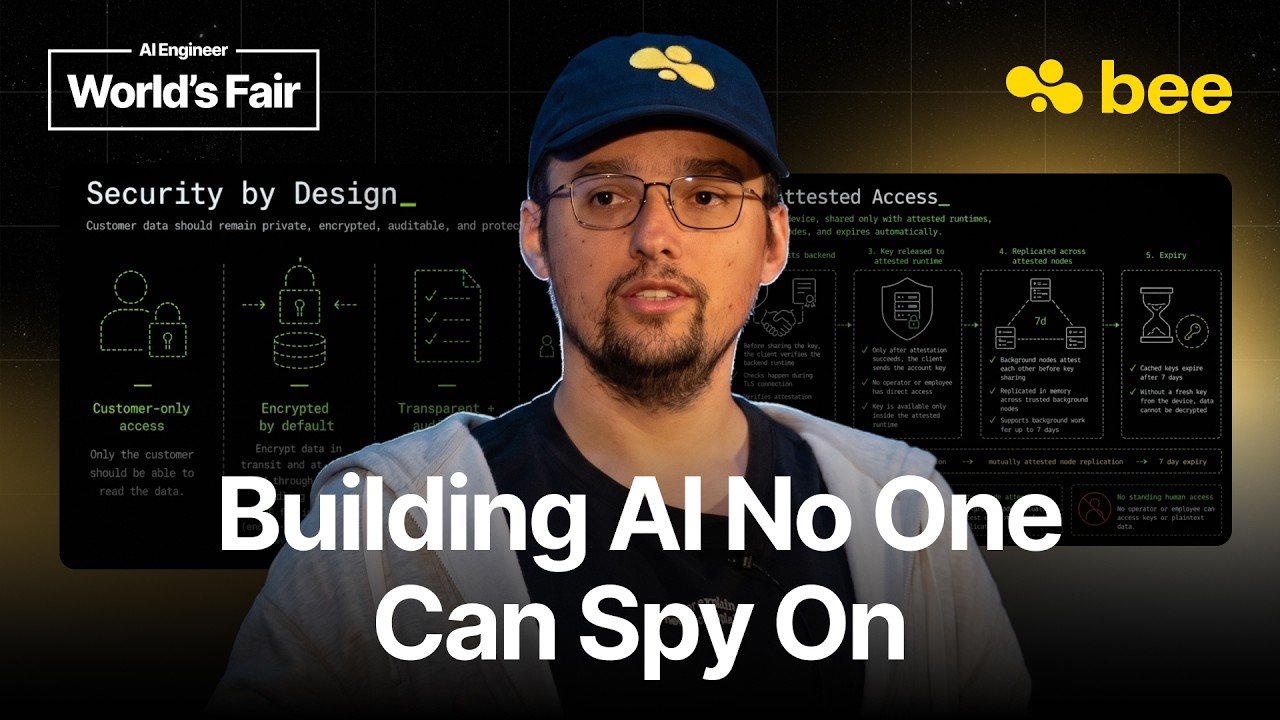
Privacy-Preserving Intelligence — Steve Korshakov, Bee (acq. Amazon)
Jul 20, 2026 · 15:53
Steve Korshakov, founder of Bee (acquired by Amazon), explains how his company built the 'most sensitive capture device on the market' with a guarantee that no one—not even Amazon—can read user data. Bee records everything a user says, generating about 10 million tokens per year, and within a week learns virtually everything about the person. To protect data, the encryption key never leaves the user's phone; the phone runs an attestation pipeline checking workloads against a public transparency log (Sigstore) before sharing the key with backends running in confidential compute. Keys in memory expire after seven days, and a two-tier signing system ensures no insider can ship code unnoticed: a separate Amazon privacy team holds signing keys hardcoded into apps. The entire system is only about 20,000 lines of memory-safe code, most of it verifying attestation, with no homegrown cryptography. Korshakov also discusses the challenges of moving from startup to Amazon, and his view on taming AI agents: sandboxing and not giving them the ability to cause harm.
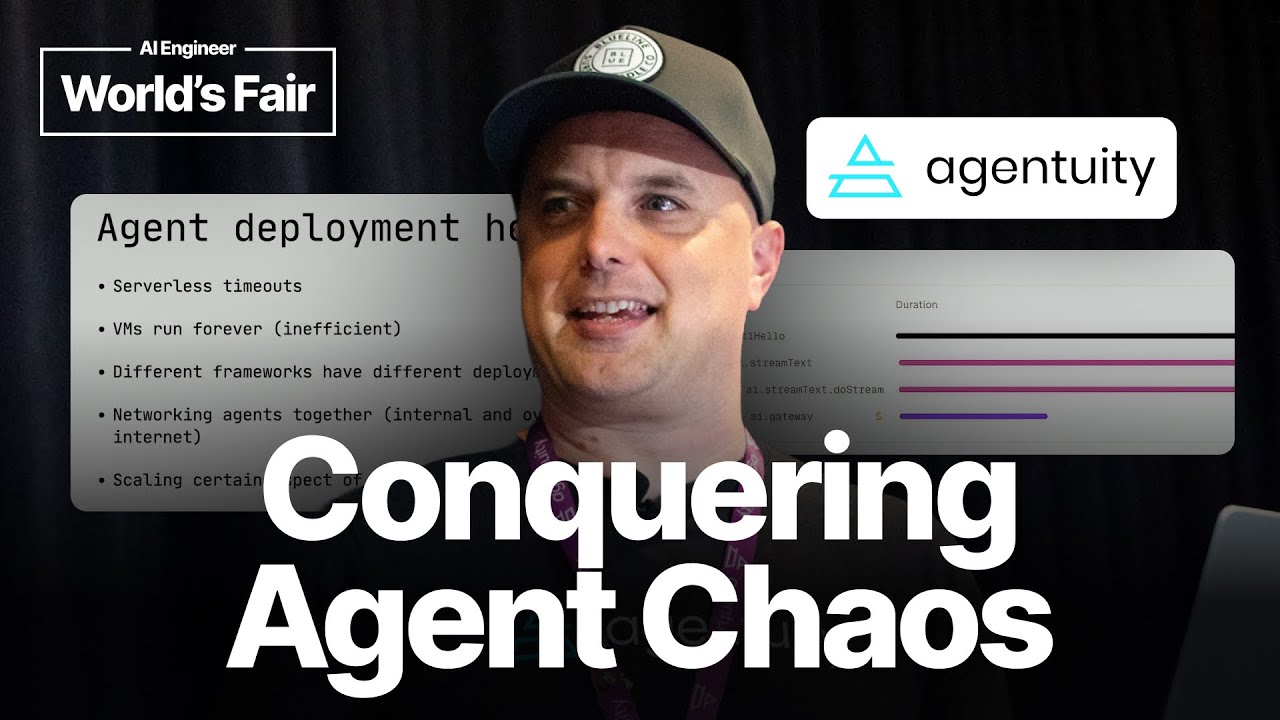
Conquering Agent Chaos — Rick Blalock, Agentuity
Jul 1, 2025 · 14:40
Rick Blalock, founder of Agentuity, argues that deploying AI agents remains the number one headache for developers, citing common issues like serverless timeouts (agents running 15–30 minutes), statelessness, and networking complexities. He demonstrates Agentuity’s platform, which treats agents as first-class infrastructure citizens: users scaffold projects via a CLI (supporting Bun, Python/UV, Node.js), write a simple request handler, and deploy with automatic routing, tunneling, and a built-in AI gateway that tracks costs per run. The platform decouples inputs and outputs—agents can be triggered via email, SMS, webhooks, or cron—and provides human and agent-facing telemetry via OTel tracing. Blalock notes Agentuity already hosts 50–60 internal agents and is building infrastructure agents to replace tools like PagerDuty, with plans to add Slack/Discord integrations and service-level reasoning capabilities.
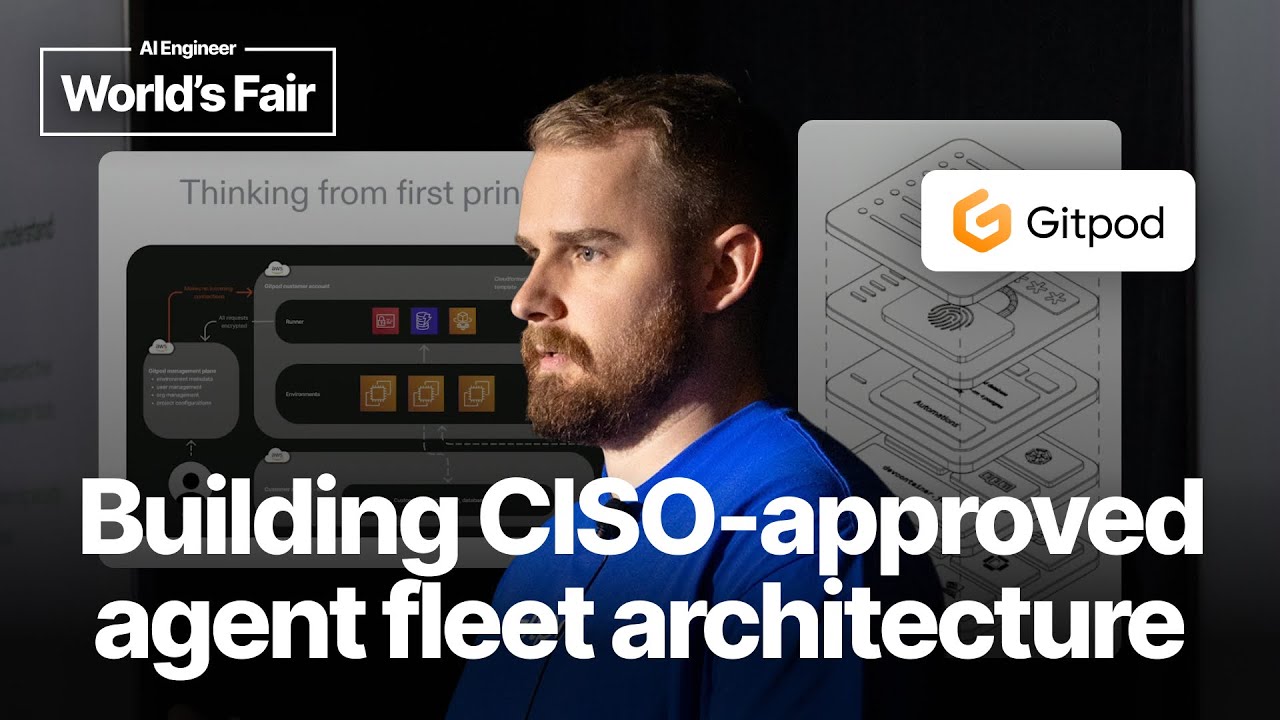
Building agent fleet architectures your CISO doesn't hate — Lou Bichard, Gitpod
Jun 27, 2025 · 13:52
Lou Bichard explains how Gitpod evolved from a managed SaaS to a 'bring your own cloud' architecture that satisfies CISOs in regulated industries by running secure dev environments—and now agent fleets—on customer infrastructure via a simple runner (a single ECS task) instead of complex Kubernetes. The platform, used by banks and healthcare firms for 37 hours per week per developer, reduces operational overhead through a cloud-formation-based setup that takes three minutes. For agents, the same infrastructure provides source code access and audit logging, ensuring privacy and compliance. Bichard argues that vendors should simplify architectures to lower customers' day-two costs, and advises buyers to prioritize security and ownership models when selecting AI tools.
Powered by PodHood