
DynamoDB
ProductA product discussed on AI Engineer.
3 episodes
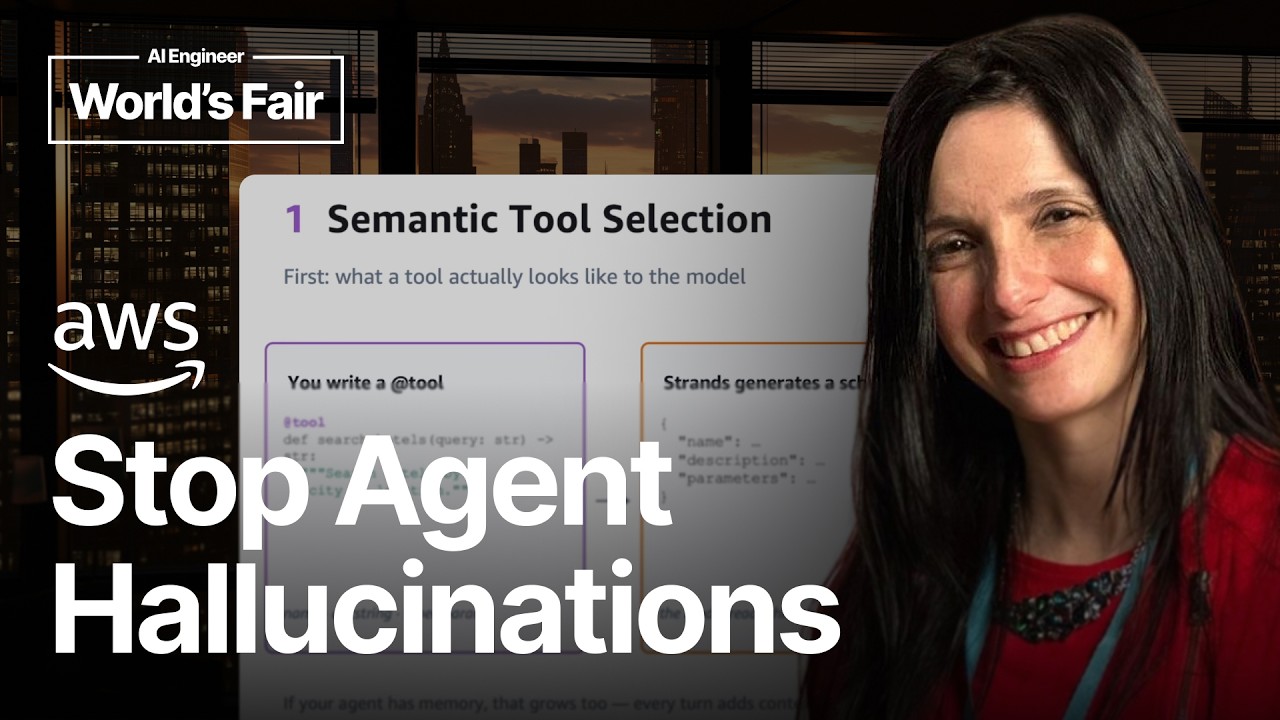
Stop AI Agent Hallucinations: 5 Techniques + Production Patterns - Elizabeth Fuentes, AWS
Jul 11, 2026 · 55:19
Elizabeth Fuentes (AWS) presents five code-based techniques to stop AI agent hallucinations, each with measurable before/after metrics. Semantic Tool Selection filters 29 tools to the 3 most relevant per query, cutting token usage from thousands to under 300 per call. Graph-RAG replaces vector similarity with structured graph queries (using Neo4j), enabling precise aggregation and multi-hop reasoning that vanilla RAG fabricates. Multi-Agent Validation uses an Executor-Validator-Critic swarm to catch fabrications, achieving a 92% detection rate. Neurosymbolic Guardrails enforce business rules in Python hooks that the agent cannot skip, achieving zero rule violations. Agent Steering guides agents to self-correct when soft rules fire, completing tasks without hard failures—demonstrated by booking 50 guests by intelligently splitting into two rooms.
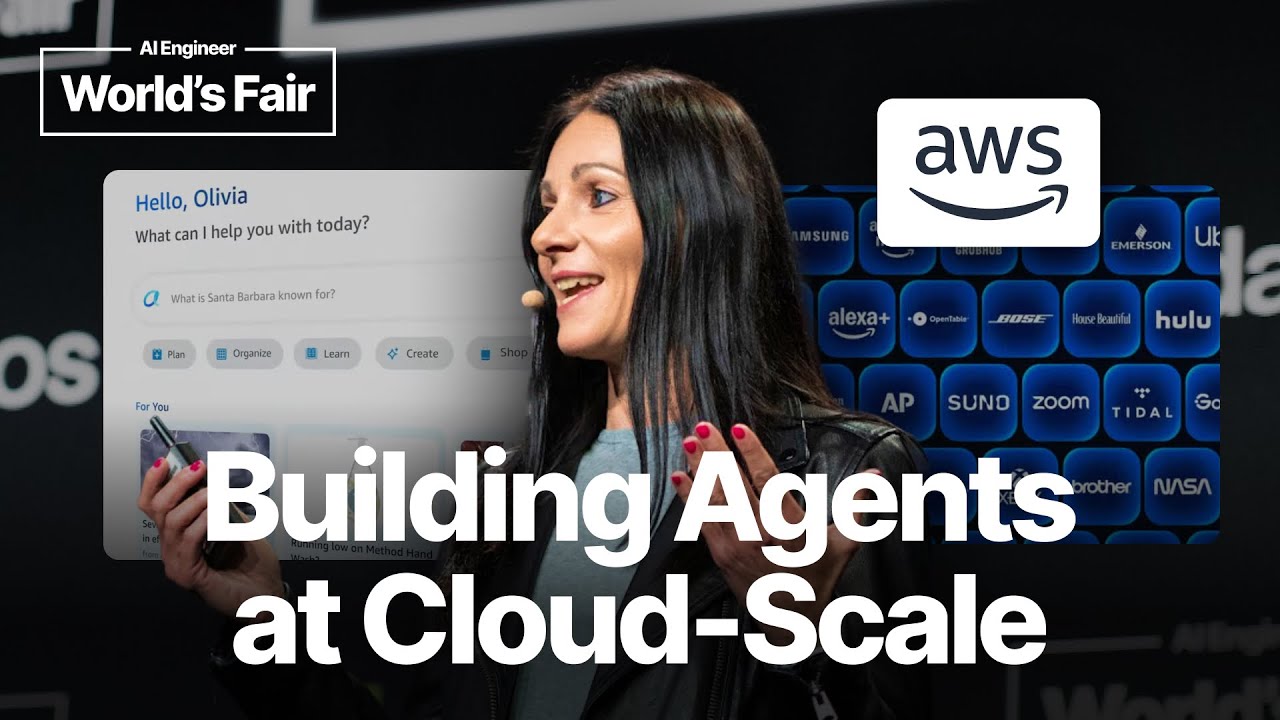
Building Agents at Cloud Scale — Antje Barth, AWS
Aug 2, 2025 · 19:00
AWS Principal Developer Advocate Antje Barth demonstrates how to build and scale AI agents using cloud-native patterns, arguing that specialized agents will reinvent customer experiences. She showcases Alexa Plus, which orchestrates hundreds of expert systems across 600M+ devices and tens of thousands of services, and the Amazon Q Developer CLI agent, shipped in just three weeks. Barth introduces Strands Agents, an open-source Python SDK for building production-ready agents that supports multiple model providers (Claude, Llama, OpenAI) and over 20 prebuilt tools including memory, RAG, and multi-agent workflows. She demonstrates integrating MCP servers via Lambda with DynamoDB for session storage, and previews upcoming A2A protocol support and a future of personal agents connecting to agent stores.

From Software Developer to AI Engineer: Antje Barth
Jul 24, 2024 · 19:48
Antje Barth, a Principal Developer Advocate for generative AI at AWS, outlines five practical steps from software developer to AI engineer: understanding foundation models, getting hands-on with AI developer tools like Amazon Q Developer, prototyping with models via Amazon Bedrock, integrating agents, and staying up to date with community events. She demonstrates Amazon Q Developer's ability to generate, explain, and transform code, reducing unvaluable tasks from 70% to focus on creative work. Barth introduces Amazon Bedrock's unified Converse API for standardized model invocation across providers like Anthropic's Claude 3.5 Sonnet, and shows how agents can be built to control a Minecraft bot through reasoning and tool use. The episode concludes with the announcement of the AI Engineering Hub at the AWS loft in San Francisco for community workshops and events.
Powered by PodHood