
DuckDB
ProductA product discussed on AI Engineer.
2 episodes
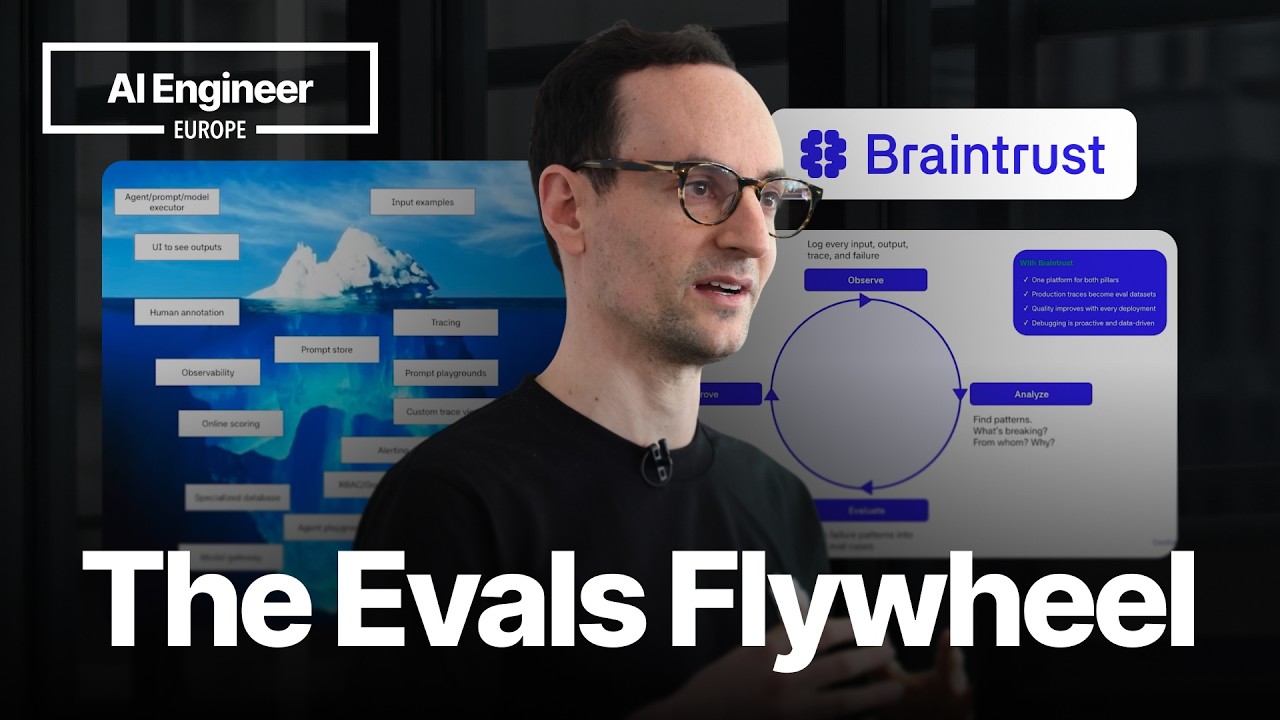
Why building eval platforms is hard — Phil Hetzel, Braintrust
Apr 28, 2026 · 25:39
Phil Hetzel of Braintrust argues that building eval platforms for AI agents is a data systems problem, not just a UI one, because LLMs have extreme variability and agent traces are semi-structured, high-volume, and large. He describes four maturity stages: simple spreadsheet with a for loop, a custom vibe-coded UI with a database, an experimentation playground for non-technical users, and finally a flywheel connecting offline evals with production observability. The core challenge is the data layer—traces can be 10-20 MB per span, requiring low-latency ingestion, aggregate analysis, and full-text search, which traditional databases cannot handle. Future platforms must surface unknown unknowns via topic modeling, support agent-to-agent interactions, and integrate automatic tracing through AI proxies. Braintrust addresses these with a custom data platform that separates hot and cold storage and enables SQL queries directly on traces.
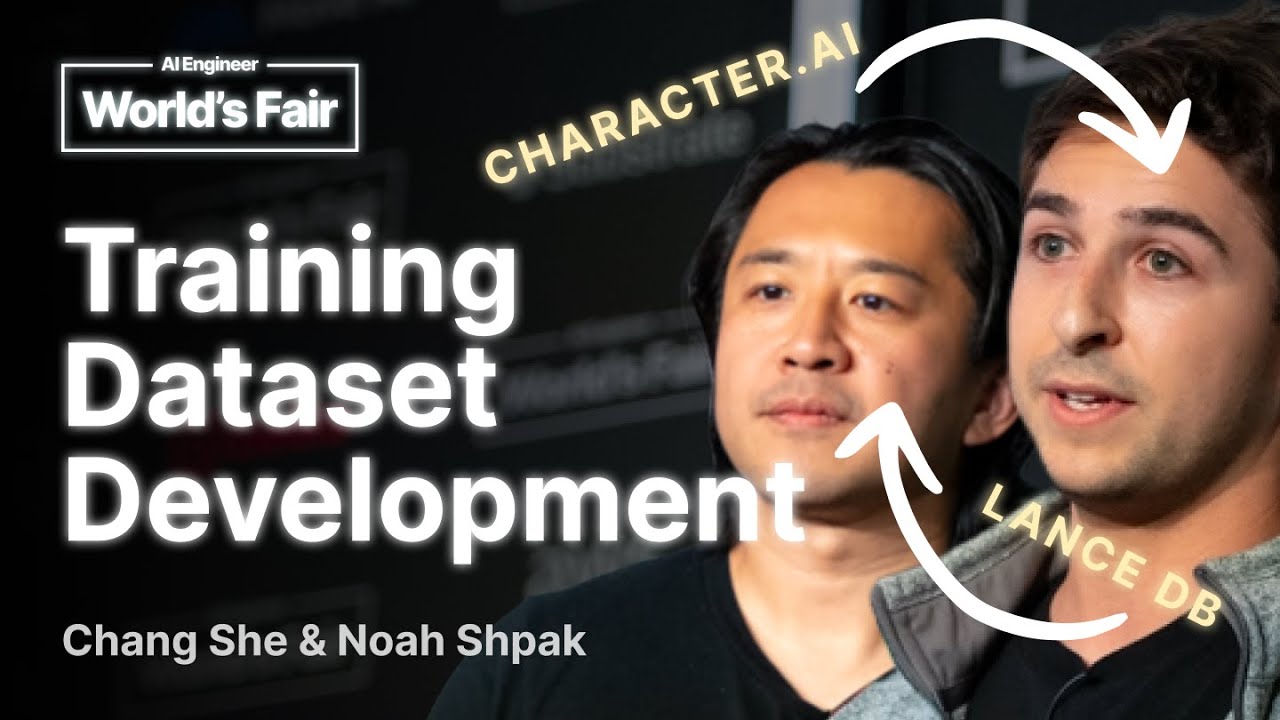
The Hierarchy of Needs for Training Dataset Development: Chang She and Noah Shpak
Oct 15, 2024 · 16:32
Chang She (CEO of LanceDB) and Noah Shpak (AI data platform lead at Character AI) argue that data infrastructure is the critical bottleneck for LLM training, and LanceDB's columnar format solves the 'new cap theorem' for AI: needing fast scans, random access, and handling large multimodal blobs simultaneously. Noah explains how Character AI structures pre-training around wide domain coverage and post-training around granular analytics like token counts and difficulty scores, using synthetic data, quality scoring, and dataset selection to improve models. Chang details how Lance format provides zero-copy schema evolution, time travel, and indexing extensions for vector, scalar, and full-text search, enabling a single table to serve SQL analytics, PyTorch training, and production vector search. The episode emphasizes that speed and iterative dataset management are key to accelerating AI research, with LanceDB facilitating cheap random access and low-infra billion-scale vector search.
Powered by PodHood