
Cascade
ProductA product discussed on AI Engineer.
3 episodes
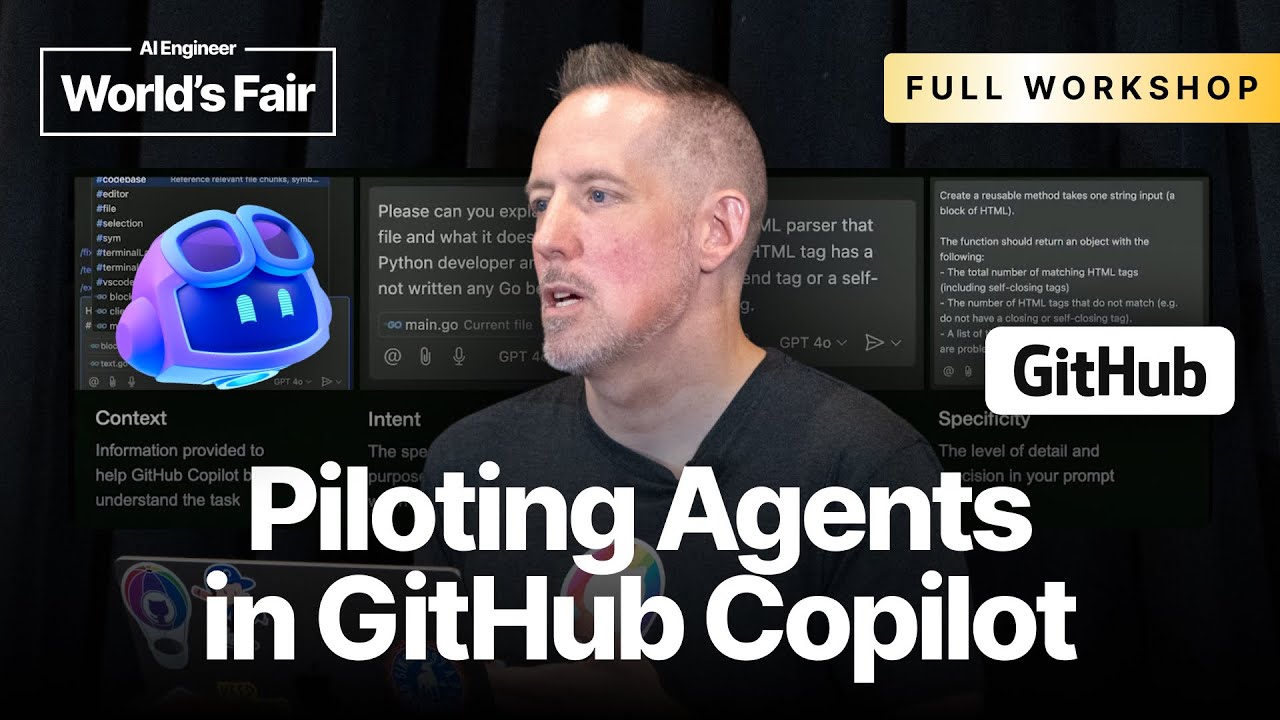
Piloting agents in GitHub Copilot - Christopher Harrison, Microsoft
Jul 26, 2025 · 59:07
Christopher Harrison (Microsoft) demonstrates GitHub Copilot's agent capabilities for AI Engineers, arguing context is key to effective pair programming. He explains Copilot's modes—completion, chat, edit, local agent, and coding agent—and how Model Context Protocol (MCP) enables access to external tools like databases. Harrison shows how Copilot-instructions.md files provide project-specific guidance, and how coding agent runs within ephemeral GitHub Actions environments with strict security (no external access, only write to its own branch). He emphasizes that AI doesn't change DevOps fundamentals: tests still run locally and via PR workflows, and code review remains essential. The lab covers assigning issues to Copilot, configuring MCP servers, and using .instructions files for reusable patterns, with a repeat session at 3:30 PM.
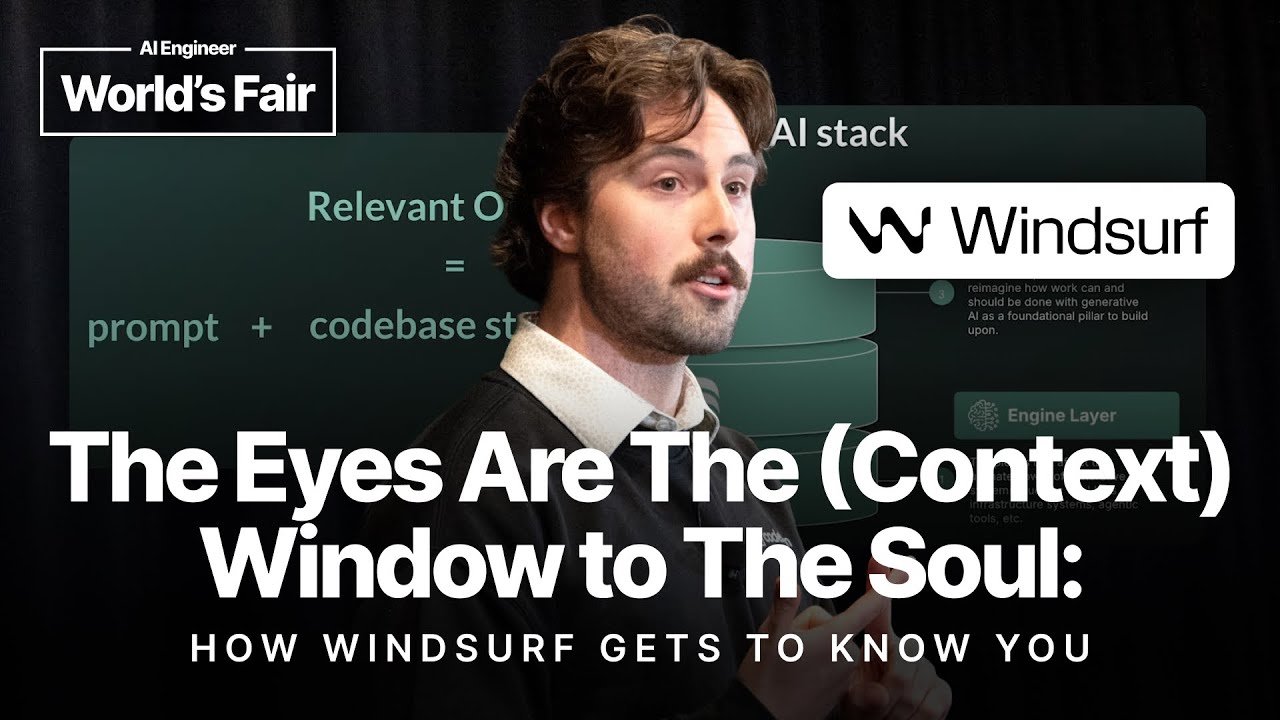
The Eyes Are The (Context) Window to The Soul: How Windsurf Gets to Know You — Sam Fertig, Windsurf
Jun 27, 2025 · 13:37
Sam Fertig, Deployed Engineer at Windsurf, explains how the AI coding IDE achieves its uncanny ability to predict developer intent by focusing on relevant context rather than merely expanding context windows. He breaks context into two pillars: heuristics (user behavior like cursor position, open files, clipboard) and hard evidence (codebase, rules, memories). The core challenge is generating code that fits existing codebases, adheres to personal and organizational standards, and remains future-proof. Windsurf optimizes retrieval quality over quantity, using techniques like embedding search, reranking, and AST parsing to balance latency and scale. Fertig also addresses privacy, stating that while code is sent to servers, data is not stored or used for training.

Mastering Engineering Flow with Windsurf - Eashan Sinha, Windsurf
Jun 27, 2025 · 15:20
Eashan Sinha, a Deployed Engineer at Windsurf, explains how engineering teams can master agentic IDEs using Windsurf's Cascade agent. He argues that developers should treat AI as a teammate rather than a tool to abuse, emphasizing Windsurf's flow awareness—tracking user actions, edits, and terminal commands to infer intent. Sinha details Windsurf's evolution from copilots to agents, combining collaborative chat with autonomous tool calling, and introduces features like state-of-the-art context engine, workflows for deterministic steps, rules, memories, and simultaneous Cascades. He provides a practical four-step framework—explore, plan, build, test—for maximizing agentic flow, including using planning files, checkboxes, and automated test generation. The episode delivers a concrete guide to integrating AI into development without sacrificing quality, recorded at the AI Engineer World's Fair in San Francisco.
Powered by PodHood