
Bun
ProductA product discussed on AI Engineer.
8 episodes

The Great Loops Debate — Dex Horthy, Geoff Huntley, Ian Livingstone, Greg Pstrucha, @insecure-agents
Jul 17, 2026 · 1:00:16
In the 'Great Loops Debate' hosted by Ali Howe, Geoff Huntley, Ian Livingstone, Dex Horthy, and Greg Pstrucha argue whether there is a delta between the hype behind loops in AI-assisted development and what works in practice. Team No Delta (Ian, Geoff) contends loops are inevitable and already cost-effective at $10.42/hour, with models surpassing average coders. Team Delta (Dex, Greg) counters that hype outruns discipline: loops work only for deterministic tasks, quality remains low, and token spend scales unsustainably. The debate covers loop history, anatomy (verification, context windows), and the feasibility of fully autonomous software factories, concluding that while loops boost productivity 2-3x, the vision of lights-off factories is premature.

Claude Fable, Claude Tag, and Anthropic's Culture — Cat Wu & Thariq Shihipar ft Simon Willison
Jul 15, 2026 · 51:30
This episode features Anthropic's Cat Wu and Thariq Shihipar discussing Claude Code, Claude Tag, and Claude Fable, arguing that these tools have shifted engineering from slow spec-driven processes to rapid, ambitious building. Thariq notes that with each model generation, delegation increased, and Claude Fable now enables one-shot features. Cat says engineers now need product taste over execution, as timelines shrink from six months to a week. Claude Tag, a proactive multiplayer agent, lands 65% of product engineering PRs internally by monitoring channels and remembering preferences. The team reduced Claude Code's system prompt by 80% for frontier models by removing examples and hard constraints, relying on model judgment. Auto mode, used internally since January, mitigates prompt injection through thousands of evals and Sonnet classifiers. Cultural hacks include default-public channels and a 'don't negotiate against ourselves' mindset, leading to ambitious builds like Thariq's Claude-powered video editing and a Street Fighter game.
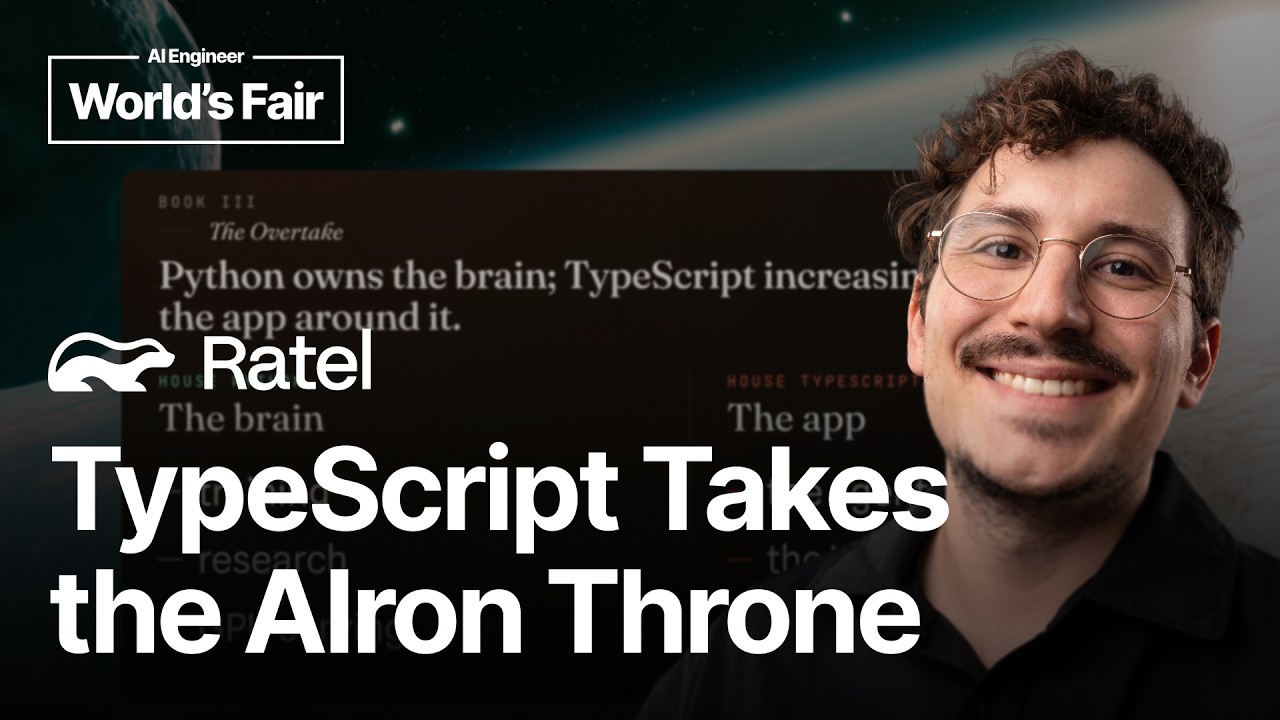
A Song of Types and Agents - Roberto Stagi, Ratel
Jul 12, 2026 · 14:16
Roberto Stagi (Ratel) argues that TypeScript is overtaking Python as the dominant language for building AI agents and applications, driven by the rise of coding agents like Lovable, Claude Code, and Cursor that default to TypeScript. He notes that Python still rules training, research, and GPU serving, but the application layer—where AI is shipped inside products—now belongs to TypeScript. Stagi highlights that TypeScript surpassed Python as the most used language on GitHub in August 2025, with GitHub attributing the shift to AI agents. He cites the Vercel AI SDK growing from 1.6M to 15.1M weekly downloads in one year and npm's rich ecosystem of authentication, payments, and UI packages as reasons to build agents in TypeScript. Consistent end-to-end typing via Zod and a unified codebase for agent loops, tools, backends, and UIs further strengthen the case. Stagi concludes by invoking Atwood's Law: any application that can be written in JavaScript will eventually be written in TypeScript, urging developers to build agents in TypeScript to avoid falling behind.
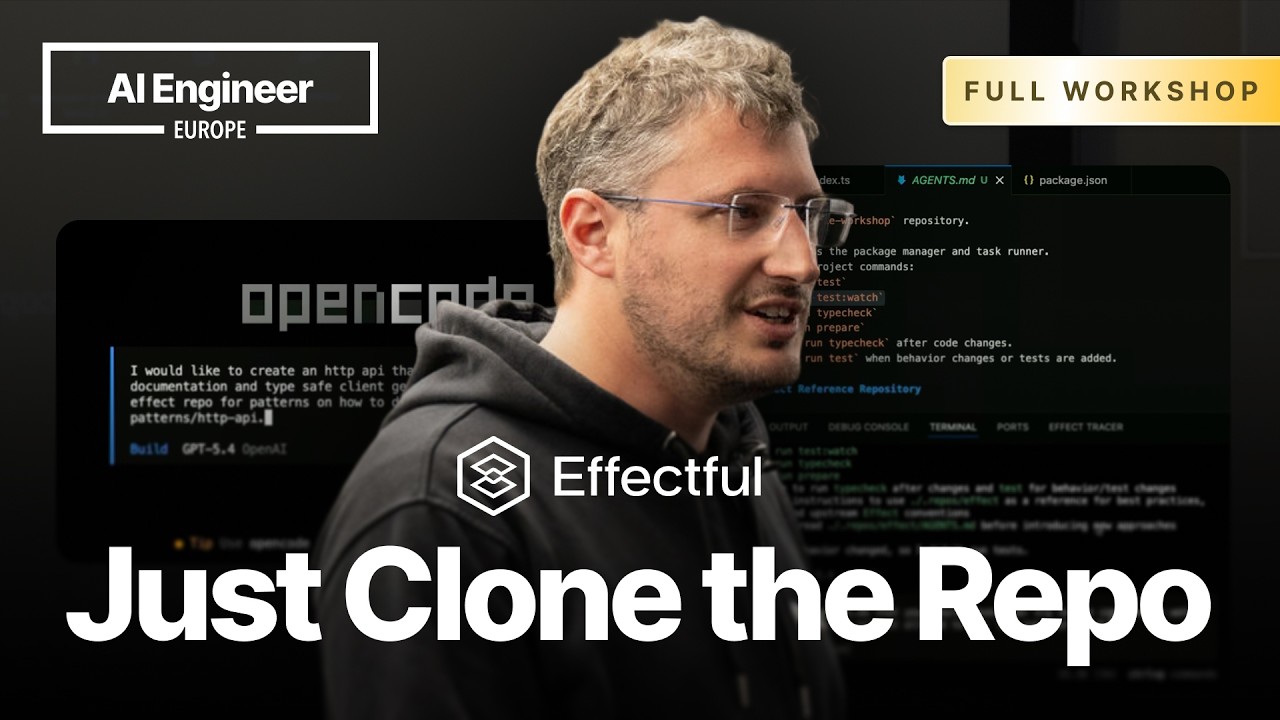
Vibe Engineering Effect Apps — Michael Arnaldi, Effectful
May 7, 2026 · 1:43:04
Michael Arnaldi demonstrates that cloning the Effect library's repository into a project, rather than relying on prompts, is the most effective way to give coding agents the context they need to build reliably with Effect. Starting from an empty repo, he sets up a Bun, Vitest, and TypeScript project, adds the Effect repo as a git subtree, and creates an agents.md to guide the agent. He then uses the agent to research patterns, resulting in a fully functional Todo HTTP API with OpenAPI docs, SQLite persistence, and tests — all from scratch in under two hours. The workshop stresses that treating the library code as part of the project, combined with strict diagnostics and pattern files, makes agents effective even in unfamiliar codebases. Arnaldi also discusses the importance of workflow systems like Effect Cluster for long-running AI processes, where server failures become likely.
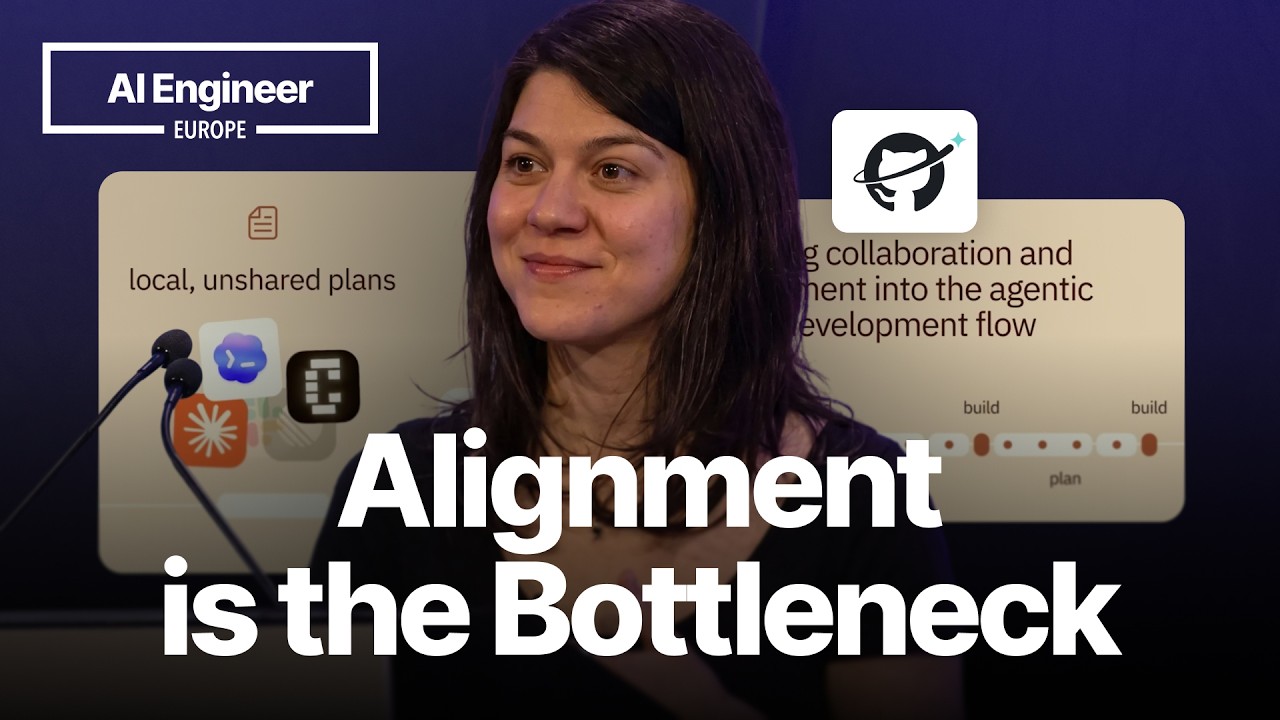
Collaborative AI Engineering: One Dev, Two Dozen Agents, Zero Alignment — Maggie Appleton, GitHub
Apr 26, 2026 · 17:43
Maggie Appleton, a staff research engineer at GitHub Next, argues that the current paradigm of one developer with a fleet of solo agents leads to zero team alignment, making software a team sport that requires shared context. She presents ACE (Agent Collaboration Environment), a multiplayer research prototype that provides shared chat sessions backed by micro VMs and Git branches, enabling real-time collaboration where designers, PMs, and developers can all prompt agents together. The talk emphasizes that implementation is now cheap and fast, so the hard question is "should we build it?" — requiring early, constant alignment to avoid wasted work, coordination debt, and unrequested features. ACE aims to reclaim time for rigorous critical thinking by letting teams plan, build, and review in a single shared space, with proactive agents summarizing team activity and unfinished work. Appleton contends that quality becomes the differentiator in a world of cheap code, and tools like ACE can help teams build a few exceptional things rather than a thousand crappy ones.

Claude Agent SDK [Full Workshop] — Thariq Shihipar, Anthropic
Jan 5, 2026 · 1:52:25
Thariq Shihipar of Anthropic presents the Claude Agent SDK, arguing that Bash and file-system-based agents outperform traditional tool-only approaches for autonomous tasks. He defines agents as systems that build their own context and trajectory, contrasting with structured workflows. The SDK, built on Claude Code, emphasizes the Bash tool as the most powerful primitive for composability and code generation, enabling non-coding tasks like data analysis. He demonstrates live-coding a Pokémon team advisor that dynamically fetches API data via scripts, and explains security through a 'Swiss cheese defense' of model alignment, AST parsing, and sandboxing. Shihipar also covers skills for progressive context disclosure, sub-agents for parallel work, and hooks for deterministic verification, stressing that agent building is an art of reading transcripts and iterating on context engineering.

Infra that fixes itself, thanks to coding agents — Mahmoud Abdelwahab, Railway
Nov 24, 2025 · 18:08
Mahmoud Abdelwahab from Railway presents Railway Autofix, a system that uses Inngest for durable execution and OpenCode as a coding agent to automatically detect infrastructure issues and open pull requests to fix them. The system runs scheduled workflows to fetch project architecture, resource metrics, and HTTP performance data, then analyzes services exceeding thresholds. For affected services, it gathers additional context like logs and generates a detailed fix plan using an LLM. The coding agent then implements the plan and opens a PR with a summary of changes. The talk demonstrates how this shifts developers from manually investigating alerts to simply reviewing auto-generated fixes.
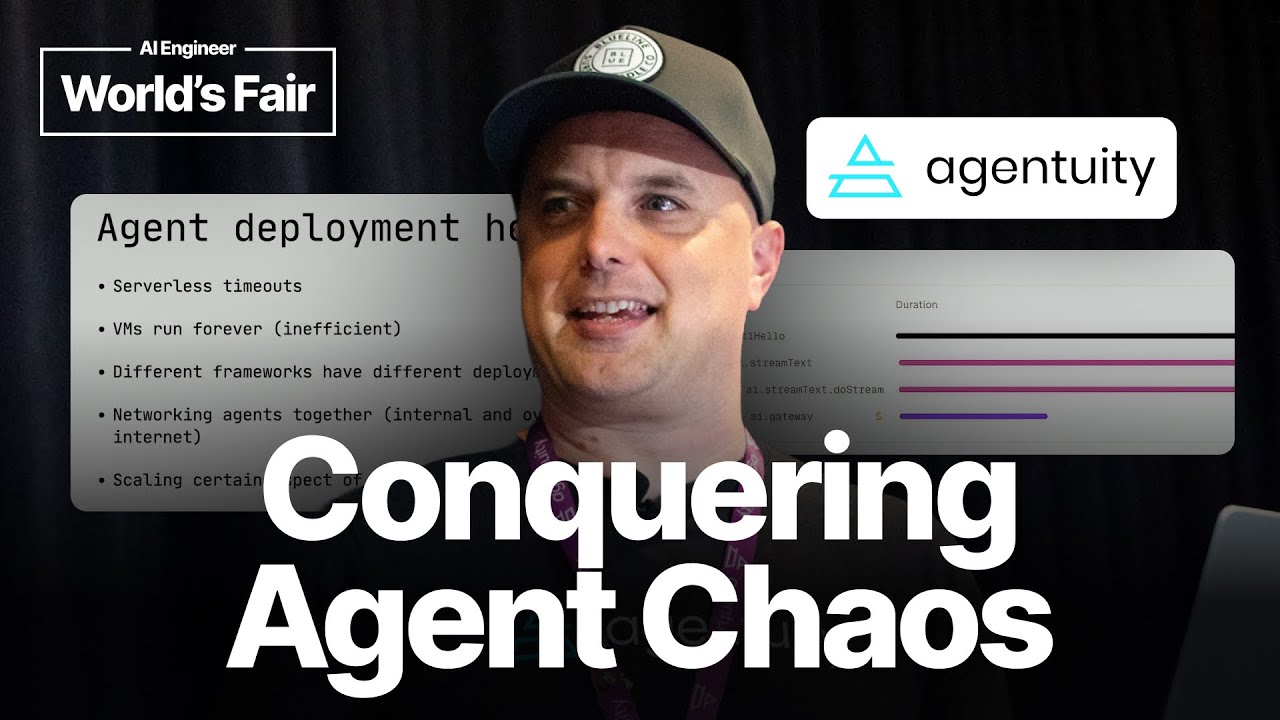
Conquering Agent Chaos — Rick Blalock, Agentuity
Jul 1, 2025 · 14:40
Rick Blalock, founder of Agentuity, argues that deploying AI agents remains the number one headache for developers, citing common issues like serverless timeouts (agents running 15–30 minutes), statelessness, and networking complexities. He demonstrates Agentuity’s platform, which treats agents as first-class infrastructure citizens: users scaffold projects via a CLI (supporting Bun, Python/UV, Node.js), write a simple request handler, and deploy with automatic routing, tunneling, and a built-in AI gateway that tracks costs per run. The platform decouples inputs and outputs—agents can be triggered via email, SMS, webhooks, or cron—and provides human and agent-facing telemetry via OTel tracing. Blalock notes Agentuity already hosts 50–60 internal agents and is building infrastructure agents to replace tools like PagerDuty, with plans to add Slack/Discord integrations and service-level reasoning capabilities.
Powered by PodHood