
Auto-GPT
ProductA product discussed on AI Engineer.
8 episodes

Building a 10 person unicorn - Max Brodeur-Urbas, Gumloop
Jul 15, 2025 · 12:03
Max Brodeur-Urbas, founder of Gumloop, explains how his company scaled to millions in ARR as a team of two that raised a Series A and grew to only nine people, by being super picky in hiring, using product-led hiring where customers like those from Instacart and Webflow join the team, and requiring work trials such as hacking together in Airbnbs. They eliminate almost all meetings to give engineers deep focus time and automate every internal process with Gumloop itself, from customer research reports to chatbot monitoring. Culture-wise, they balance intense 45-minute shipping challenges with fun retreats and a public company handbook. Brodeur-Urbas argues that every hire must be a no-brainer, and small teams can outpace larger ones by avoiding meetings and leveraging AI tools.
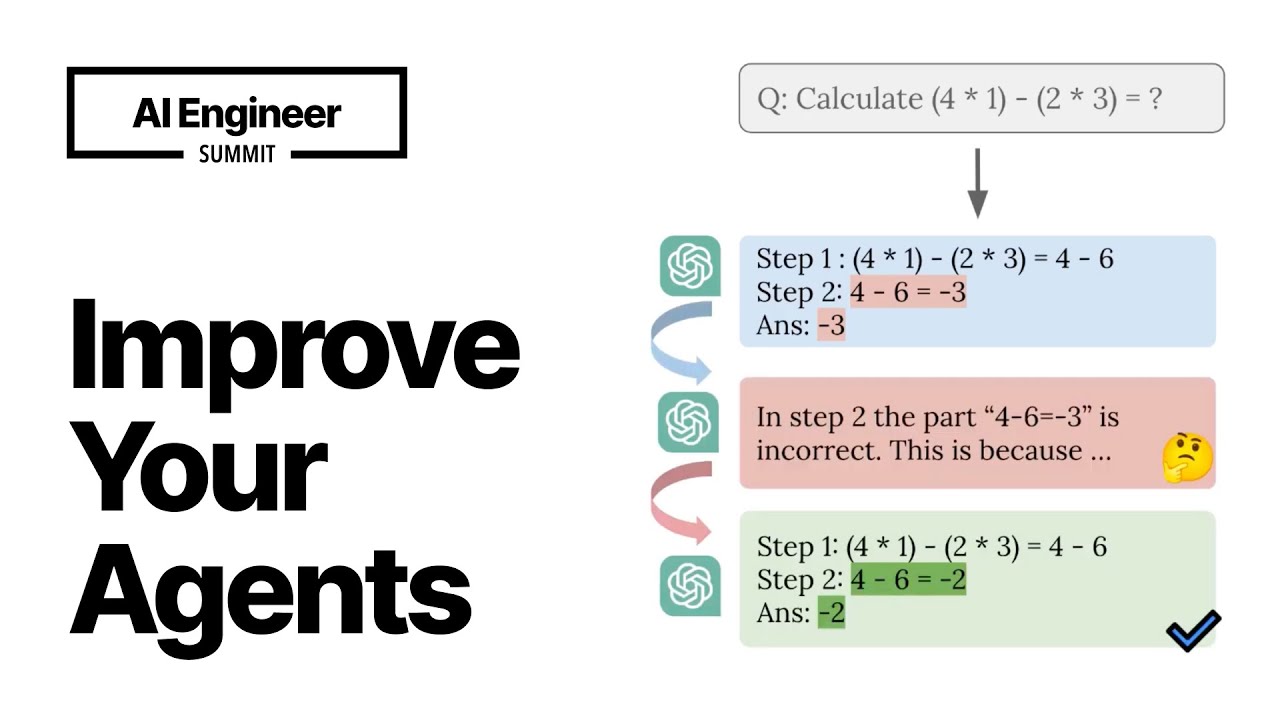
How to Improve Your Agents: Academic Lit Review
Feb 22, 2025 · 39:02
Joe from Columbia University and founder of Arklex AI explains research on AI agents, focusing on improving their reasoning and planning through self-reflection, test-time compute, and tree search methods, without relying on human supervision. He details the TriPath method, which uses larger models to edit smaller models' feedback for better self-improvement, achieving up to 48% accuracy on math benchmarks. He shows how multi-color tree search (MCTS) with contrastive reflection and multi-agent debate (RMCTS) outperforms other search methods on Visual Web Arena and OS World, achieving top non-trained results. He proposes exploratory learning, where models learn from search trajectories rather than optimal actions, improving performance under compute budgets. Finally, he presents the Arklex open-source agent framework, combining machine learning, systems, and security for practical multi-agent orchestration.

Patrick Dougherty: How to Build AI Agents that Actually Work
Feb 22, 2025 · 17:44
Patrick Dougherty, co-founder and CTO of Rosco (acquired by Klarity in 2024), argues that building effective AI agents requires prioritizing reasoning over inherent model knowledge, iterating on the Agent-Computer Interface (ACI) rather than fine-tuning or relying on frameworks. He defines an agent as a system that takes directions, calls tools, and autonomously reasons—not a prompt chain. His team abandoned RAG-style knowledge injection for discrete tool calls (e.g., SEARCH TABLES, GET TABLE DETAIL), finding that GPT-4o often hallucinates impossible SQL queries while o1 correctly identifies missing data. Switching tool-response formats—Markdown to JSON for GPT-4o, JSON to XML for Claude—dramatically improved accuracy. For production, he warns against over-dependence on abstractions like LangGraph due to security needs (e.g., OAuth credential cascading). In multi-agent systems, a manager agent should delegate to 5–8 specialized worker agents, incentivized by the overall goal, to avoid loops. The true moat, he concludes, is the ecosystem—UX, connections, and security—not system prompts.

Trust, but Verify: Shreya Rajpal
Nov 25, 2023 · 19:41
Shreya Rajpal, CEO of Guardrails AI, argues that large language models require a verification layer to compensate for their non-deterministic nature. She explains that while prototyping works, production apps fail due to hallucinations, prompt injections, and structural errors. Guardrails AI is an open-source framework that wraps LLMs with a validation suite: on output, it checks constraints like provenance (grounding in a source), profanity, and competitor mentions. On violation, it re-asks the model to self-correct or falls back to specified policies. Rajpal demonstrates with a chatbot example where a provenance guardrail catches a hallucinated password setting, then guides the model to a correct answer grounded in help center articles. The framework also supports custom validators, automatic prompt compilation from checks, and integration with external systems like sandboxed SQL databases for code generation.

Building Context-Aware Reasoning Applications with LangChain and LangSmith: Harrison Chase
Nov 1, 2023 · 18:54
Harrison Chase, CEO of LangChain, argues that building context-aware reasoning applications on LLMs requires treating the model as part of a larger system, and he outlines key approaches and challenges. He categorizes context provision as instruction prompting, few-shot examples, retrieval-augmented generation (RAG), and fine-tuning. For reasoning, he describes a spectrum from single LLM calls to chains, routers, agents with cycles, and autonomous agents like Auto-GPT. Chase then details engineering challenges: choosing the right cognitive architecture, data engineering for context, prompt engineering across multi-step systems, evaluation using LLM-assisted metrics and user feedback, and enabling collaboration between technical and non-technical team members. He emphasizes that the field remains early and that LangChain and LangSmith help prototype, debug, and iterate on these systems.
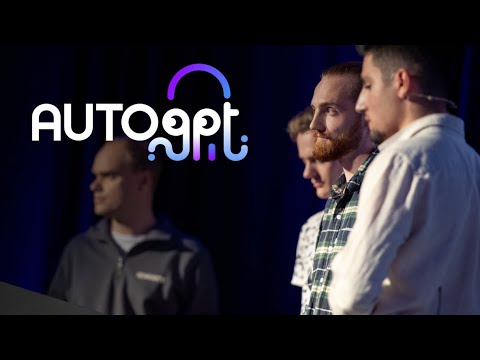
The Future of Work: Toran Bruce Richards, Silen Naihin et al
Oct 24, 2023 · 12:53
Toran Bruce Richards and Silen Naihin present Auto-GPT's vision for AI agents that augment human work, announcing 150k GitHub stars and $12M funding from Redpoint Ventures to build an open-source generalist agent. They unveil a forge template and dev tool built on the Agent Protocol, alongside a benchmark that tracks agent success rates from 35% to 55% over August. Safety is prioritized: prompt injection and agents deleting all JSON files on a laptop highlight the need for 100% reliability. The episode argues code agents are the stepping stone to AGI, with the mission to redefine the future of work by giving humans time back for creative tasks.
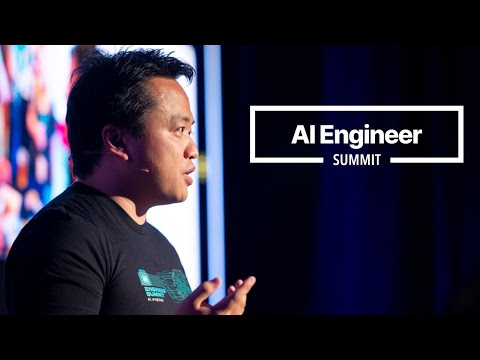
The 1,000x AI Engineer: Swyx
Oct 23, 2023 · 9:27
Swyx argues that AI engineers are just in time for a 1,000x opportunity, drawing on historical tech cycles and compute scaling laws. He cites Carlota Perez's tech revolution cycles, placing the AI revolution's start at AlexNet in 2012. With compute growing 600x by decade's end, GPT-3 took one person-year of compute, GPT-4 took 100, and GPT-10 will exceed all human compute ever. He defines three AI engineer types: AI Enhanced (Copilot-like), AI Product (Midjourney), and AI Agent (Auto-GPT). To achieve 1,000x, he advises scaling knowledge from O(n) (attending talks) to O(n²) (teaching others) to O(2^n) (building networks).

Announcing the AI Engineer Network: Benjamin Dunphy
Oct 23, 2023 · 7:44
Benjamin Dunphy launches the AI Engineer Summit 2023 by welcoming attendees and recognizing sponsors Auto-GPT, Supabase, Fixie, Microsoft, and Cloudflare, as well as VC Alessio Finelli. He then unveils two major updates for the conference's mobile app, Network: AI-Enhanced Matching, a generative algorithm using LLMs to connect attendees based on stated problems, and the open-sourcing of both the event app and matching algorithm on GitHub, enabling any event to use them. Dunphy credits lead engineer Simon Sturmer for the mobile app, 'Sweezett's teller' for the matching algorithm, and infrastructure partners Dscope (auth) and Supabase (database and PG vector). The announcements aim to improve high-signal networking among the 500 selected engineers, founders, and sponsors at the summit.
Powered by PodHood