
Sentry
CompanyA company discussed on AI Engineer.
5 episodes

GTM Is You - Victoria Melnikova, Evil Martians
Jul 7, 2026 · 12:35
Victoria Melnikova argues that a founder's personal brand is the most underrated competitive advantage for developer tool startups in 2026, citing interviews with Sam Lambert (Planet Scale), Zeno Rocha, and David Cramer. She presents the Product-Market Fit Compass, a framework from Evil Martians that analyzed 37 successful DevTools, finding that 9 out of 10 times product signal is stronger than revenue, making distribution the bottleneck. Key tactics include moving to San Francisco for network effects, using banners and billboards to signal credibility (as TypeCents did with hundreds of billboards), hosting events like Supabase's user conference, and embracing failures (Zeno Rocha walked away from 300k ARR to start over). Melnikova emphasizes being unapologetically yourself, as AI can amplify but not replace unique personal brands, and notes that founder-led sales builds trust in early-stage startups.
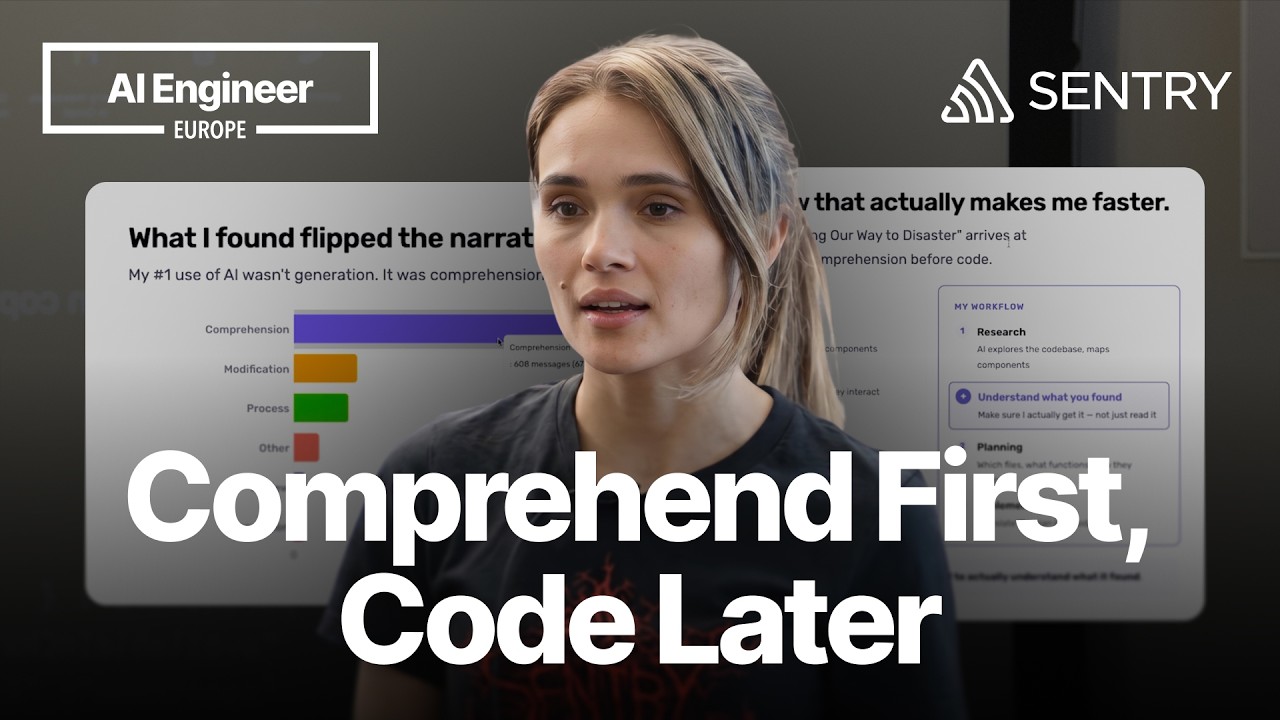
The AI Skill I Rely On Daily — Priscila Andre de Oliveira, Sentry
May 27, 2026 · 17:05
Priscila Andre de Oliveira, a senior software engineer at Sentry, reveals that 67% of her AI usage is for comprehension and only 2% for code generation, based on analyzing 116 of her own Claude sessions. Working in Sentry's 15-year-old codebase with 100 PRs merged daily and 100,000 organizations depending on it, she built a personal skill called 'Catch Me Up' with six exploration modes (architecture, conventions, feature traces, syntax, testing, history). She argues that understanding what the agent found before letting it plan and implement prevents misaligned mental models that produce slop code. The episode emphasizes that in large, complex codebases, AI's biggest unlock is comprehension, not generation, and advises developers to align their mental models before prompting.

Why Rust is the Ideal Language for Vibe-Coding — Daniel Szoke, Sentry
May 27, 2026 · 16:25
Daniel Szoke, Sentry's Rust SDK maintainer, argues Rust is ideal for vibe-coding: its compiler enforces correctness, catching bugs that Python and TypeScript allow to compile and run. He challenges the preference for easy-to-write languages, warning that dynamic typing and null values invite subtle bugs. Szoke highlights Rust's type safety, null safety, and fearless concurrency, demonstrating with a 100-thread counter where TypeScript's data race compiles and fails intermittently while Rust rejects it with an error naming the non-Send type. He argues every compile error an agent fixes is a production bug avoided, and the Rust compiler is faster and more reliable than a review agent.
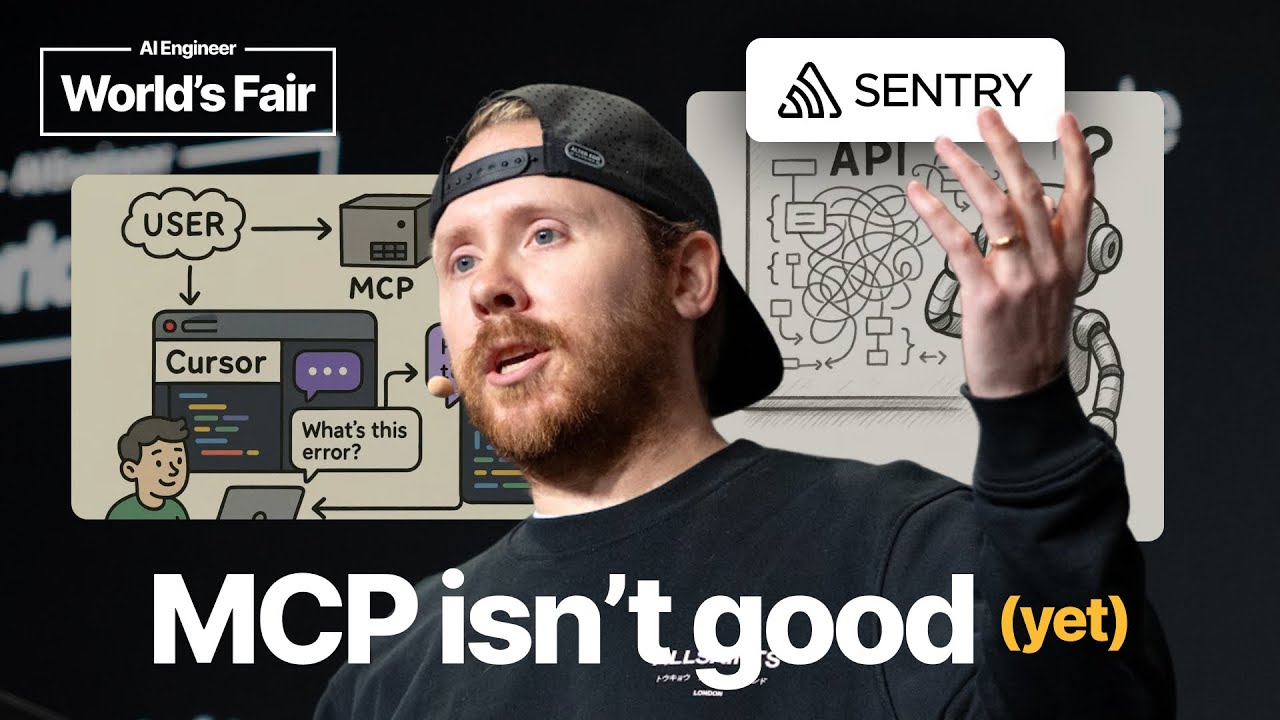
MCP Is Not Good Yet — David Cramer, Sentry
Jul 3, 2025 · 16:41
David Cramer, founder and engineer at Sentry, argues that the Model Context Protocol (MCP) is a pluggable architecture for agents, not a simple API overlay, and that it is not yet good but worth experimenting with. He stresses that exposing existing OpenAPI endpoints as MCP tools yields terrible results; instead, developers must design context specifically for agents, returning Markdown rather than raw JSON to improve model reasoning. Cramer details Sentry's MCP server, built in two days using Cloudflare Workers for OAuth 2.1, and notes that remote OAuth is essential for B2B SaaS, while standard I/O introduces security risks. He highlights the need for careful token and cost management—citing a single request that produced 20 API calls to Sentry—and advocates for building dedicated agents (like Sentry's root cause analysis tool) that wrap MCP, giving the provider control over prompts, models, and error handling. Despite ongoing issues like lack of streaming responses and unstable client support, Cramer concludes that MCP's core concepts (plug-ins, agents, tools) are just familiar software patterns with new names.

OpenLLMetry is all you need
Feb 22, 2025 · 9:12
Nir, CEO of Trace Loop, introduces OpenLLMetry, an open-source project extending OpenTelemetry for tracing and monitoring GenAI applications. OpenTelemetry, maintained by CNCF, standardizes logging, metrics, and traces across cloud environments, supported by platforms like Datadog, New Relic, and Grafana. OpenLLMetry provides over 40 automatic instrumentations for foundation models (OpenAI, Anthropic, Cohere), vector databases (Pinecone, Chroma), and frameworks (LangChain, LlamaIndex, CrewAI). These instrumentations emit logs, metrics, and traces in OpenTelemetry format, allowing users to send data to any supported observability backend with a configuration change, avoiding vendor lock-in.
Powered by PodHood