
Physical Intelligence
CompanyA company discussed on AI Engineer.
2 episodes
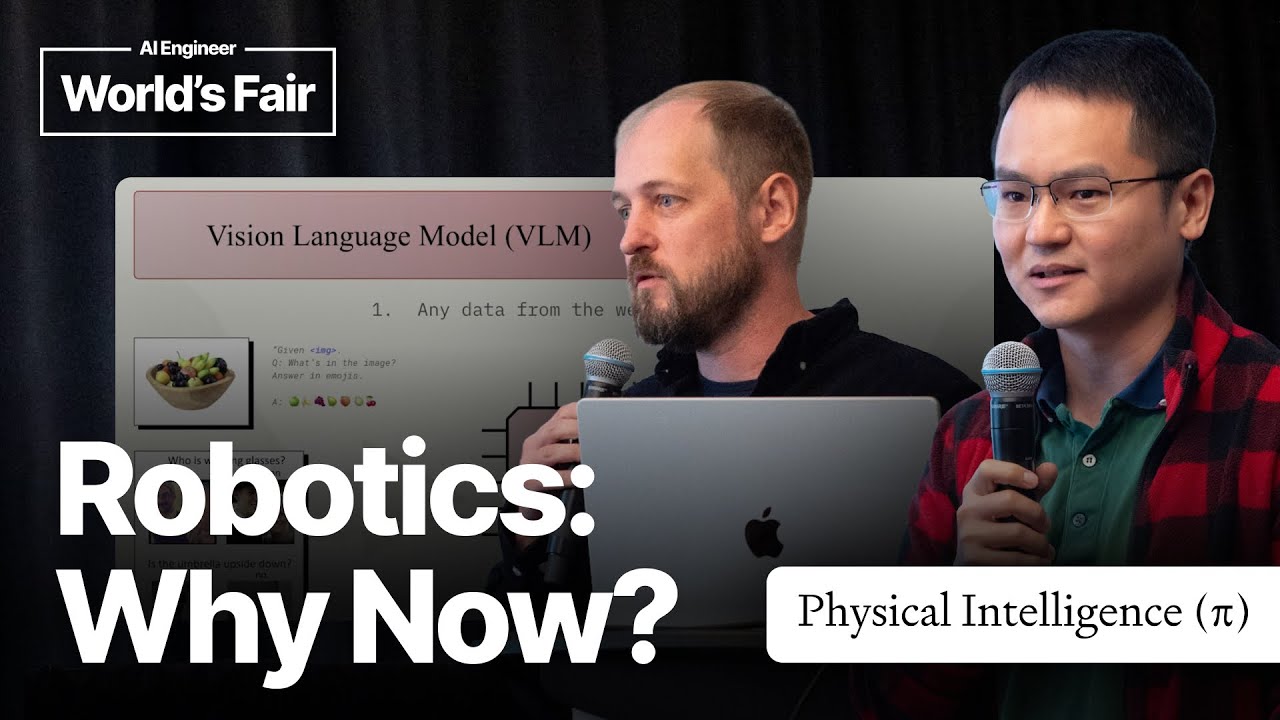
Robotics: why now? - Quan Vuong and Jost Tobias Springberg, Physical Intelligence
Jul 26, 2025 · 18:07
Physical Intelligence's Quan Vuong and Jost Tobias Springberg describe their mission to build a model that can control any robot to do any task, arguing that software intelligence is the main bottleneck in robotics. They explain Vision Language Action models (VLAs) as adaptations of vision language models that output robot actions instead of text. To train these models, they built a data engine from scratch, collecting 10,000 hours of successful episodes via teleoperation in six months. Their latest model, PAIO-5, achieves open-world generalization by training on data from multiple homes, matching or surpassing performance on held-out scenes. They demonstrate this with a policy that performs long-horizon tasks like cleaning an unseen bedroom for up to 10 minutes autonomously. They also highlight a remote coffee-making demonstration on a robot they never touched, showing model portability across hardware.
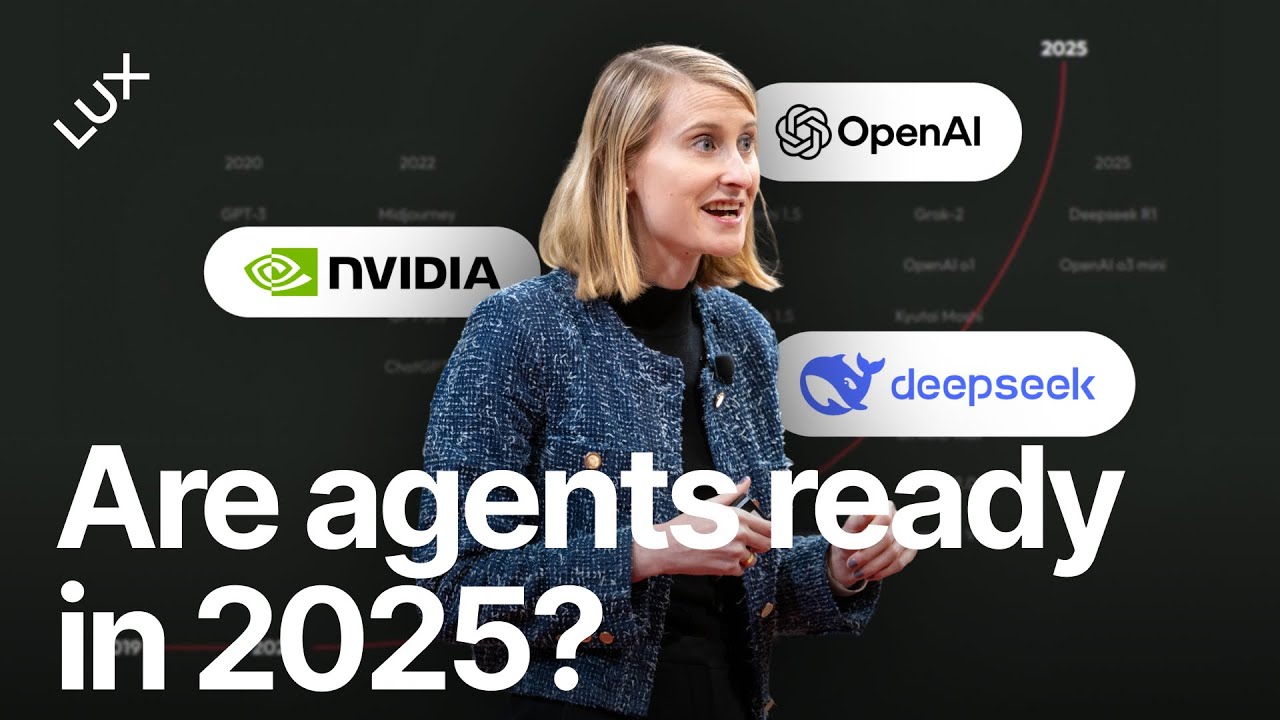
Navigating AI’s Frontier in 2025 - Grace Isford, Lux Capital
Mar 13, 2025 · 17:55
Grace Isford, partner at Lux Capital, argues that while 2025 is a 'perfect storm' for AI agents with reasoning models like O3 and R1, cheaper inference, and billions in infrastructure (e.g., Stargate, DeepSeek), agents still fail due to cumulative errors—decision, implementation, heuristic, and taste—exemplified by OpenAI Operator booking a flight incorrectly. She prescribes five strategies: curating proprietary and agent-generated data, building personalized evals for non-verifiable domains (e.g., seat preference), designing scaffolding that prevents cascading failures (citing Ramp's approach), treating UX as the moat (e.g., Codium, Harvey, TLDraw), and building multimodally with voice, smell via Osmo, and touch for embodiment. The talk, recorded at the AI Engineer Summit 2025 in NYC, closes with a call to reframe perfection through visionary product experiences.
Powered by PodHood