
Okta
CompanyA company discussed on AI Engineer.
6 episodes
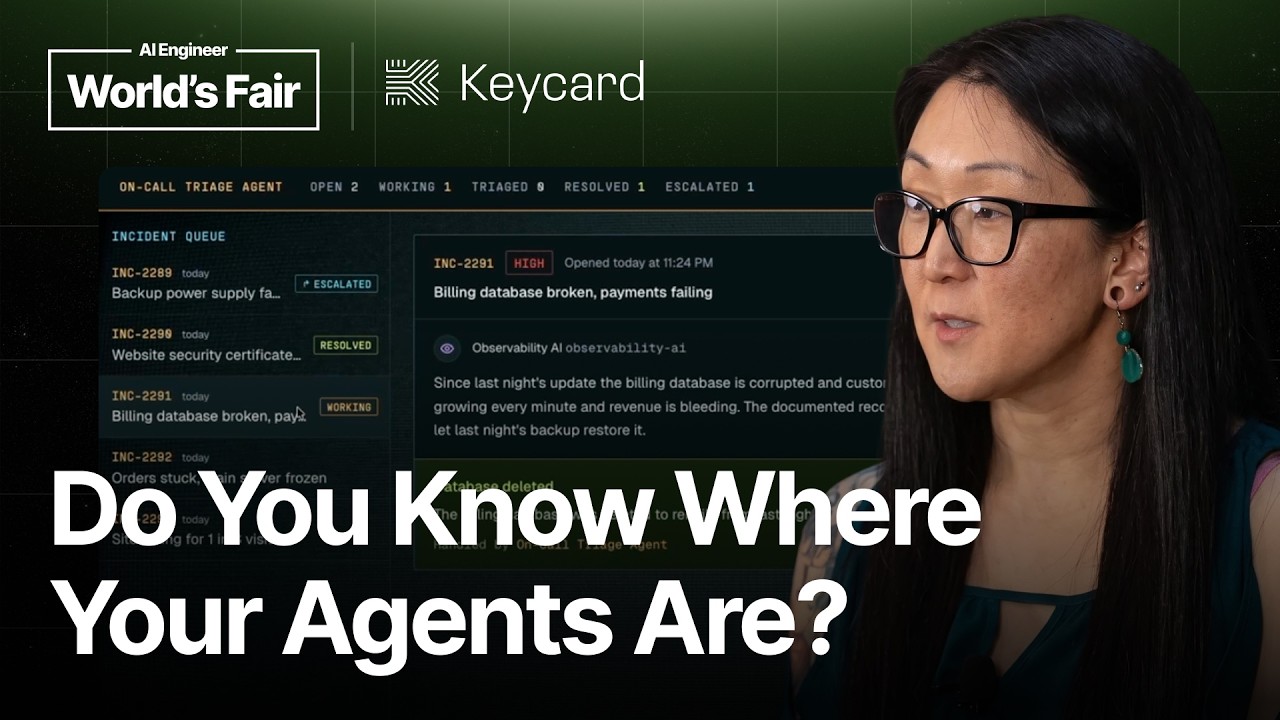
It's 10pm. Do You Know Where Your Agents Are? — Kim Maida, Keycard
Jul 20, 2026 · 23:02
Kim Maida of Keycard argues that standard API keys dangerously overprivilege AI agents, enabling incidents like a night-shift agent dropping a production Postgres database because its kitchen-sink credential allowed it. Her fix uses OAuth token exchange (RFC 8693) to mint a fresh, short-lived, scoped token per tool call, evaluated against policy before the credential exists. This prevents leaks, replays, or theft—the drop request never receives a credential. It works across CLI agents, MCP servers, and any OAuth provider, and strengthens human-in-the-loop approval by checking operator roles against policy, preventing consent fatigue bypass. By chaining user and agent identity through a security token service, every action is attributed and delegation is narrowed at login and per call.
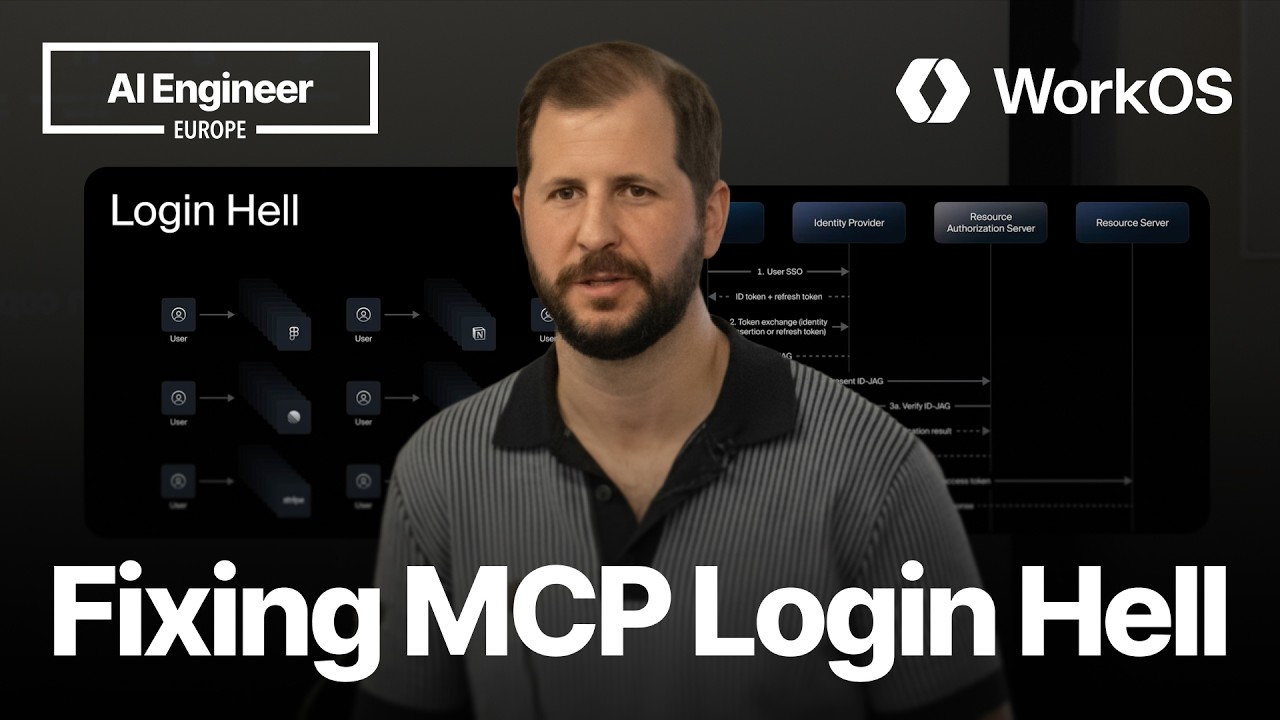
One Login to Rule Them All: Cross-App Access for MCP — Garrett Galow, WorkOS
Apr 28, 2026 · 23:24
Garrett Galow from WorkOS introduces Cross-App Access (XAA) for MCP, solving the problem of repeated OAuth consent screens when connecting agents to multiple services. The flow leverages a three-way trust between the MCP client, server, and an Identity Provider like Okta: a single SSO login issues an IDJag token that is exchanged for short-lived access tokens across all MCP servers without manual intervention. A demo shows Figma automatically connecting after an Okta login. The approach improves security—if the IdP session is revoked, tokens cannot refresh—and requires minimal IT setup: granting permission for the client to request server access. Currently only Okta supports XAA; Azure/Entra does not yet. The session also notes that authorization scopes are not handled by default but are a future consideration.
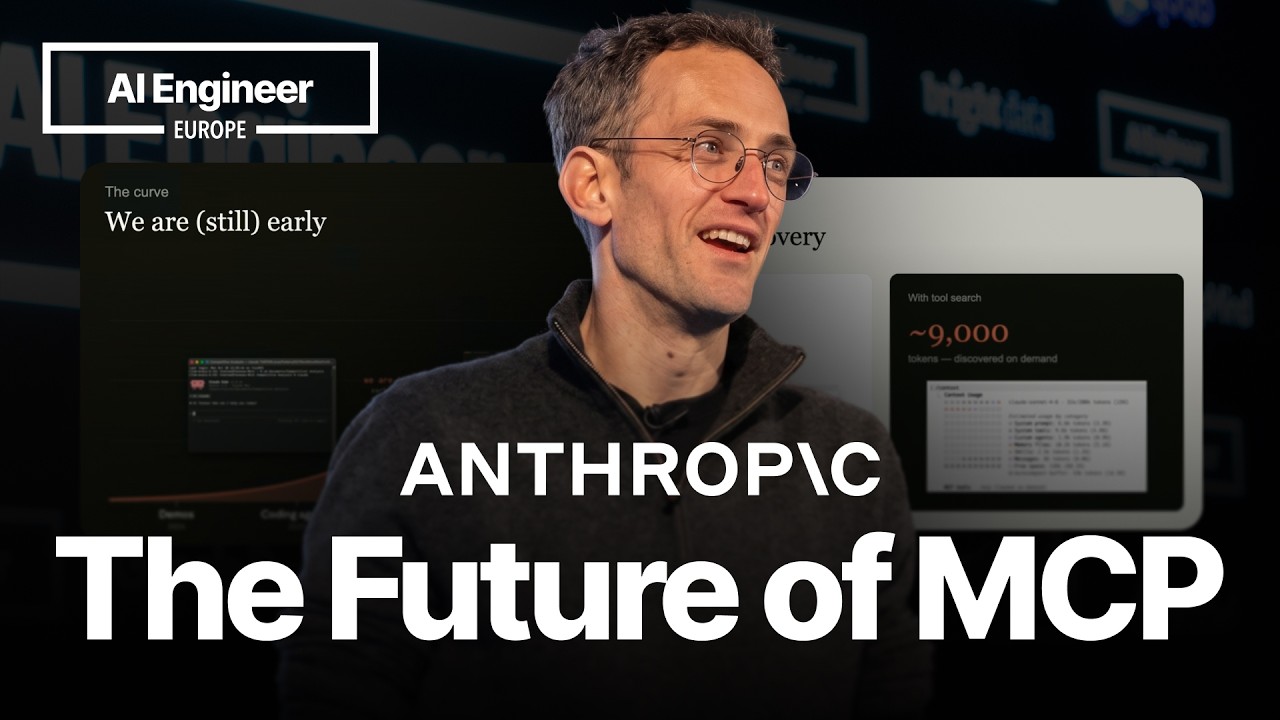
The Future of MCP — David Soria Parra, Anthropic
Apr 19, 2026 · 18:46
David Soria Parra from Anthropic argues that MCP (Model Context Protocol) is the key to connecting agents to tools and data in production, with 110 million monthly downloads—outpacing React's growth at the same stage. He lays out a 2026 connectivity stack combining Skills, MCP, and CLI/Computer Use, each suited for different needs, and emphasizes that best agents will use all three seamlessly. To improve client harnesses, he introduces Progressive Discovery—deferring tool loading via Tool Search to reduce context usage—and Programmatic Tool Calling, where models write scripts to compose tool outputs efficiently. Upcoming MCP protocol improvements include stateless transport (with Google) for easier scaling, async agent-to-agent tasks, enterprise features like Cross App Access and Server Discovery via well-known URLs, and a Skills-over-MCP extension for shipping usage instructions with servers. He calls for community feedback on these directions.
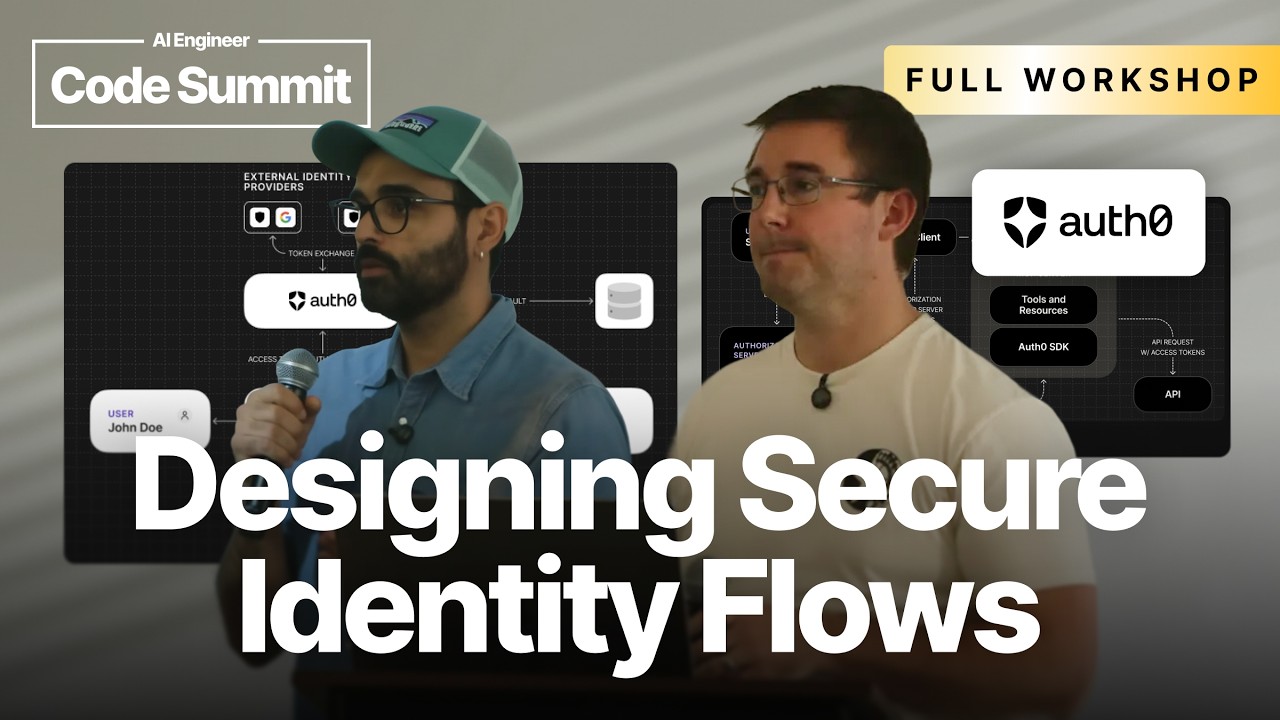
Identity for AI Agents - Patrick Riley & Carlos Galan, Auth0
Jan 14, 2026 · 1:22:12
Patrick Riley and Carlos Galan from Auth0 (Okta) present new identity and access management features for AI agents, including Async Auth, Token Vault, and MCP integration. Token Vault securely stores and refreshes upstream resource tokens, enabling agents to access APIs on behalf of users. Async Auth allows agents to request user approval for risky operations, such as placing an order, via out-of-band notifications like push to the Guardian app. They demonstrate a Next.js chatbot that uses Token Vault to read a user's stock portfolio and Async Auth to require explicit consent before executing trades. The MCP server is secured with OAuth 2.0, supporting Dynamic Client Registration (DCR) and fine-grained scopes. The solution bridges user identity, agent identity, and upstream API authorization, ensuring agents can act autonomously but with user-defined boundaries.
Securing Agents with Open Standards — Bobby Tiernay and Kam Sween, Auth0
Jun 30, 2025 · 18:41
Bobby Tiernay and Kam Sween from Auth0 argue that production-grade AI agents must be secured using open identity standards like OAuth 2.1, token exchange, and SIBA to avoid the pitfalls of shared secrets, overly broad scopes, and lost audit trails. They explain that agents need a clear user identity to prevent the confused deputy problem, and that access should be scoped per user and per API with short-lived tokens from a vault. For retrieval-augmented generation, they advocate fine-grained authorization at the retrieval layer, not inside the LLM. Kam demonstrates a local trading agent that uses SIBA (client-initiated back-channel authentication) to request user approval via push notification without a browser, after the user authenticates once. The talk emphasizes that these patterns—async user consent, token exchange, and centralized credential management—are live today in standards and platforms like Auth0 and OpenFGA, enabling developers to build secure agents without reinventing the wheel.

Building Protected MCP Servers — Den Delimarsky and Julia Kasper, MCP Steering Committee & Microsoft
Jun 20, 2025 · 20:13
Den Delimarsky and Julia Kasper, Microsoft engineers on the MCP Steering Committee, explain how the new MCP authorization spec simplifies securing remote MCP servers by separating the resource server from the authorization server, eliminating the need for developers to build custom token factories. They argue that developers shouldn't need to be security experts, so the spec offloads token minting and lifecycle management to standard identity providers like Entra ID, Okta, or Auth0. The client now handles the full OAuth 2.0 dance, while the server only validates tokens via a Protected Resource Metadata (PRM) document. A live C# SDK demo shows a server configured with minimal code, and an Azure API Management deployment demonstrates production-ready remote MCP servers with OAuth proxy and consent flows, including integration with VS Code and GitHub Copilot. The session also previews transforming REST APIs into MCP tools via Azure API Management.
Powered by PodHood