
McKinsey
CompanyA company discussed on AI Engineer.
5 episodes
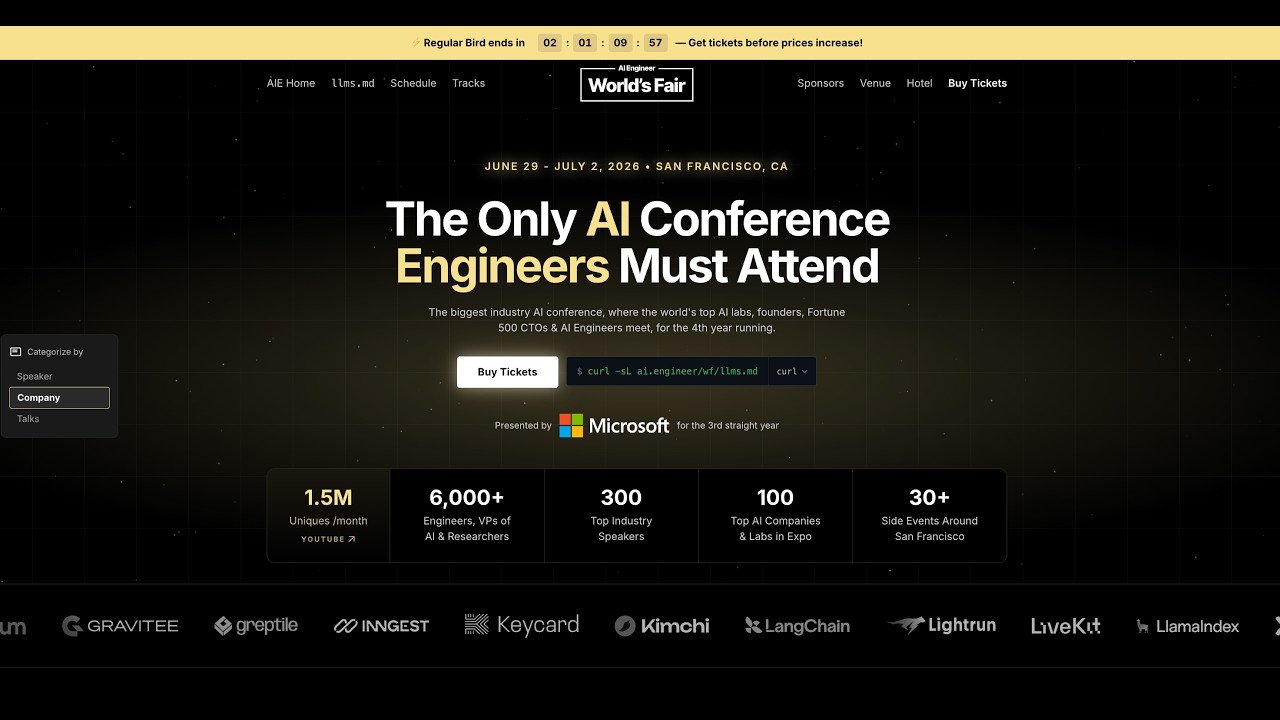
6 Things to Know about AIE World's Fair 2026
Jun 21, 2026 · 17:50
Swix, co-founder of AI Engineer, outlines six key features of the 2026 World's Fair in San Francisco. The event is over 4x larger than 2025, with 50% new topics, an expanded expo floor (4 stages, 4x bigger), and a new research-industry poster session that includes printed tweets. A leadership track on Level 3 features the Token Billionaire lounge for heavy LLM users and off-the-record McKinsey sessions. AI verticals debut in agentic commerce, healthcare, finance, and GTM, with a new AI Engineer New York focused on finance. Side events include a World Cup viewing, New Engineer Orientation (NEO) with 300+ signups, and a kids event; attendees can claim $38,000 in sponsor offers.
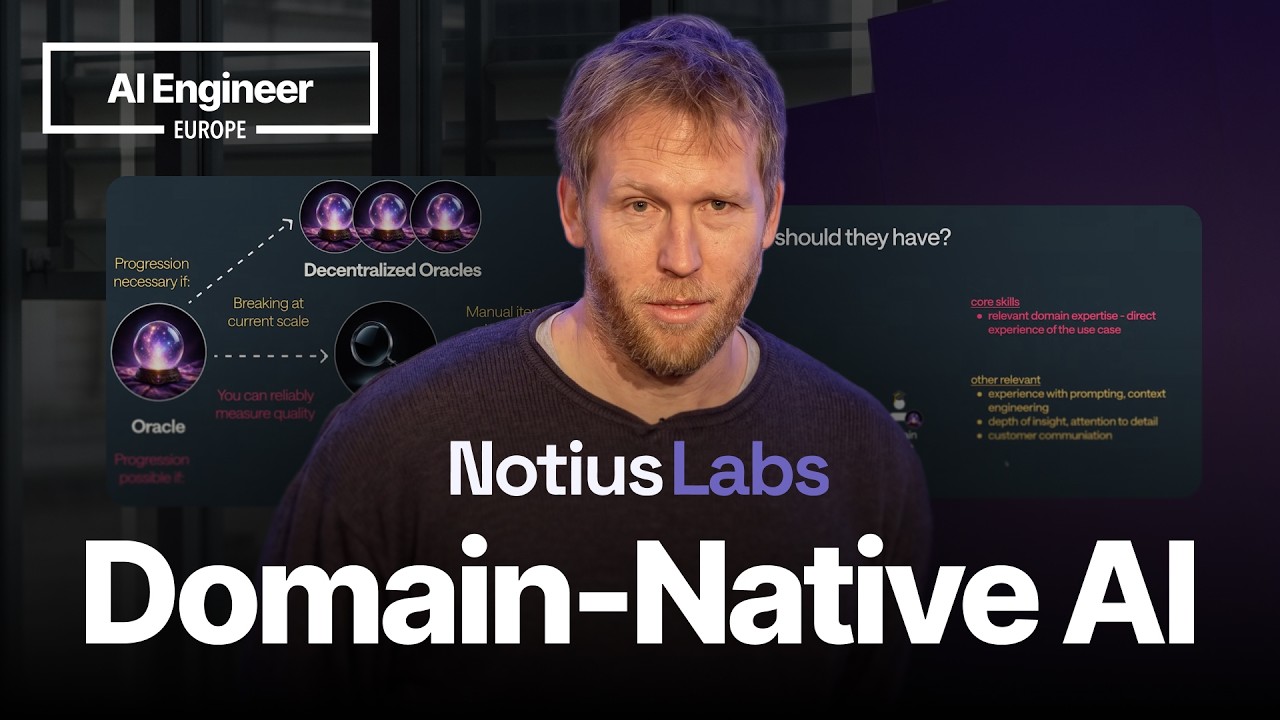
How to Leverage Domain Expertise — Chris Lovejoy, Notius Labs
May 16, 2026 · 24:45
Chris Lovejoy argues that winning in vertical AI is an organizational problem solved by domain experts acting as Oracle (directly improving AI), Evaluator (defining metrics for engineers), or Architect (building self-improving systems). Granola's first employee, a writer, reviews meeting notes and tweaks prompts as an Oracle because there is no objectively perfect note. Tandem used decentralized Oracles—doctors per specialty and country—to handle variation in medical scribe outputs. Anteria progressed from Oracle to Evaluator to Architect as prior authorization required measurable correctness and automated learning from usage variation. Lovejoy advises hiring a principal domain expert early, giving them ownership, and hiring for breadth (domain expertise plus adjacent skills like data science or engineering) to avoid slow progress and turnover.

AI Consulting in Practice – NLW, Superintelligent, @AIDailyBrief
Dec 18, 2025 · 18:18
NLW, host of the AI Daily Brief and CEO of Superintelligent, presents findings from an ROI survey of enterprise AI adoption, revealing that 44.3% of organizations report modest ROI and 37.6% report high ROI, with 67% expecting high growth next year. Agent adoption jumped from 11% to 42% in 2024, yet only 7% of organizations are fully at scale, and most remain in pilot phases. Time savings accounts for 35% of use cases, but automation and agentic use cases significantly outperform others in self-reported ROI. Risk reduction use cases, though only 3.4% of submissions, are most likely to yield transformational impact at 25%. Larger organizations and those using AI across multiple functions see greater benefits, while coding and software-related use cases show above-average ROI.

Moving away from Agile: What's Next – Martin Harrysson & Natasha Maniar, McKinsey & Company
Dec 12, 2025 · 21:55
McKinsey's Martin Harrysson and Natasha Maniar argue that enterprises must overhaul their people and operating models—moving beyond Agile to AI-native workflows—to capture the full potential of AI in software development. They identify bottlenecks like work allocation, manual code review, and tech debt that limit gains to 5-15% despite promising individual productivity stories. To scale, they advocate AI-native workflows (spec-driven development, continuous planning) and AI-native roles (smaller pods of 3-5 with consolidated roles). In a client study with a bank, interventions led to 60x increase in agent consumption, 51% increase in code mergers, and faster delivery tied to business priorities. They emphasize change management: 70% of companies haven't changed roles, and top performers invest in hands-on upskilling, measurement systems that track outcomes beyond adoption, and incentives to drive adoption.

Cohere for VPs of AI: Vivek Muppalla
Feb 5, 2025 · 16:11
Vivek Muppalla, Director of Engineering at Cohere, details the company's enterprise AI strategy centered on security, customization, and deployment flexibility. He presents Cohere's product line: Command R and R+ for generation, plus advanced retrieval models like embeddings and the ReRanker, which reduces RAG costs by narrowing context. Key claims include a focus on enterprise-specific eval suites (health, HR, finance), out-of-the-box citations, and multilingual performance. Partnerships with Accenture and McKinsey bridge the last-mile gap, while wins often stem from private cloud deployment and data control. In Q&A, he recommends purpose-built classifiers for high-throughput production and notes current 128k context windows.
Powered by PodHood