
Browserbase
CompanyA company discussed on AI Engineer.
5 episodes

Making Codebases Agent Ready – Eno Reyes, Factory AI
Dec 22, 2025 · 15:33
Eno Reyes of Factory AI argues that the primary bottleneck for AI agents in software engineering is not model capability but the 'agent readiness' of the codebase, measured by eight categories of automated verification including linters, tests, and documentation. He describes a shift from specification-based to verification-based development (Software 2.0), where agents succeed only when environments have fast feedback loops and explicit constraints. Reyes presents a flywheel: better validation enables better agents, which in turn improve validation, and claims this investment can yield 5x, 6x, 7x engineering velocity. He advises organizations to measure their readiness across pillars like style validation, build systems, and observability, and to remediate gaps using agents themselves. The talk emphasizes that organizational practices, not tool selection, determine agent success.
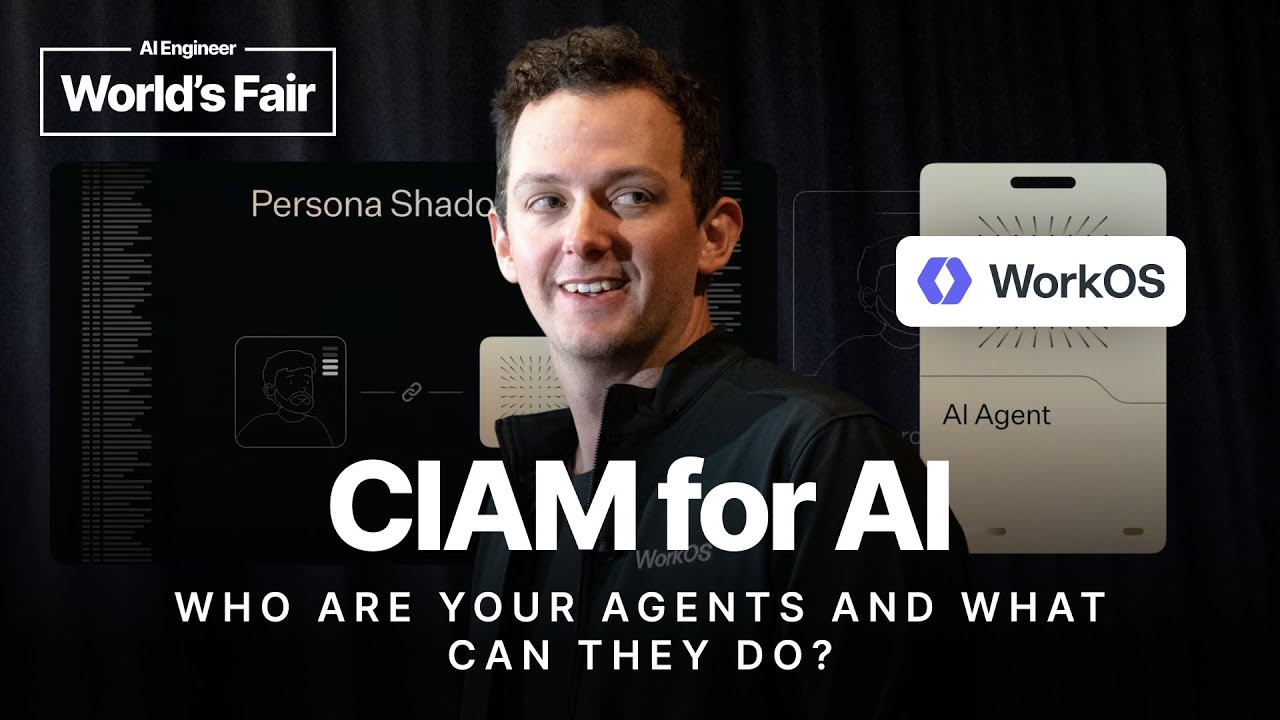
CIAM for AI: Authn/Authz for Agents — Michael Grinich, CEO of WorkOS
Jul 21, 2025 · 20:13
Michael Grinich, CEO of WorkOS, argues that AI agents need first-class identity and access management, distinct from human or machine-to-machine auth. He identifies key challenges: headless login, least privilege for non-deterministic systems, and compliance tracking. Grinich presents four emerging patterns—persona shadowing, delegation chains, capability tokens, and human-in-the-loop escalation—and references standards like OAuth, UMA, GNAP, OIDC for agents, and verifiable credentials. He predicts a shift from 95% human traffic to 95% agent traffic, calling for middleware trust boundaries and urgent collaboration on agent identity standards.

The rise of the agentic economy on the shoulders of MCP — Jan Curn, Apify
Jul 18, 2025 · 18:08
Jan Curn, founder of Apify, argues that MCP (Model Context Protocol) enables a future agentic economy where AI agents autonomously discover and purchase tools from other agents or businesses (B2A/A2A). He explains that Apify's marketplace of 5,000 Actors (Docker-based tools) now integrates with MCP, allowing agents to dynamically discover and call any Actor via tool discovery — a key MCP feature. Curn demonstrates this with Claude Desktop, where an agent uses Apify's MCP server to find a venue, scrape Twitter, and even fill a form via a nested MCP server from Browserbase, all without prior configuration. He notes that Apify pays creators over $250,000 monthly, with total Actor revenue exceeding $1.5M/month, and that any developer can publish an Actor to monetize their tools instantly across the ecosystem. The talk closes with open questions about reliability, trust, and whether autonomous agent interaction can lead to AGI.
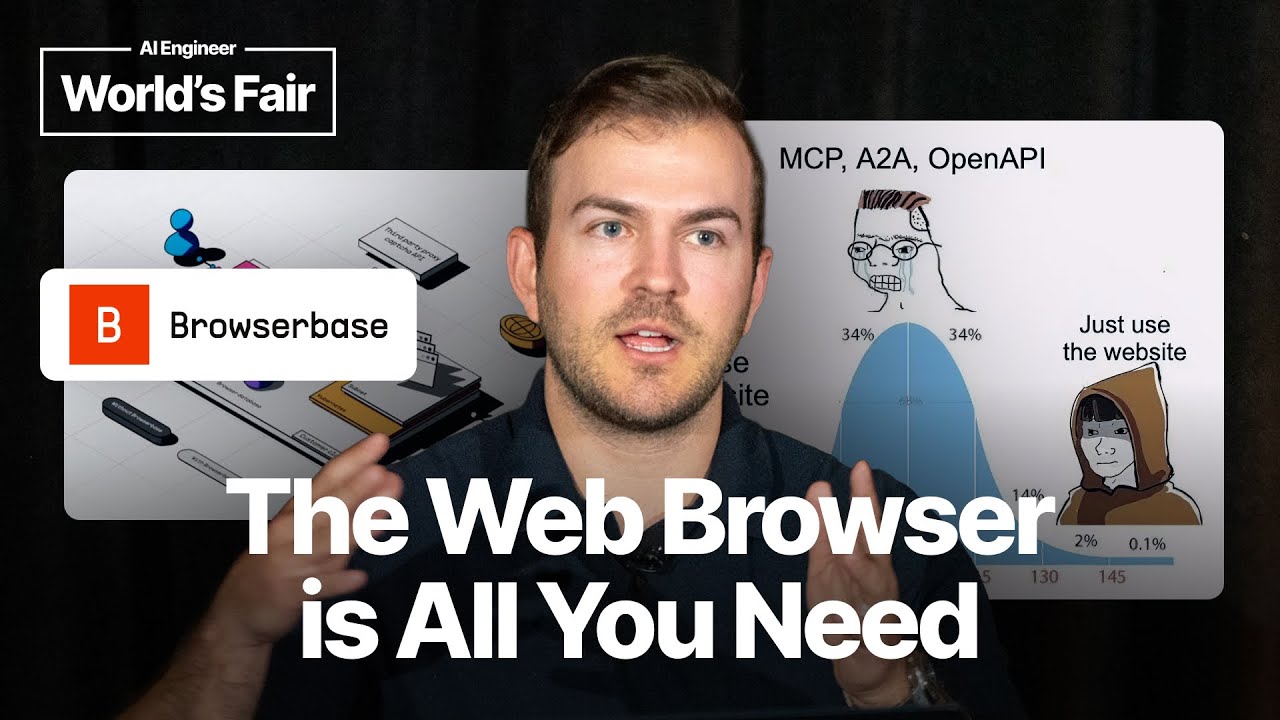
The Web Browser Is All You Need - Paul Klein IV, Browserbase
Jun 20, 2025 · 17:31
Paul Klein IV, founder of Browserbase, argues that the web browser is the default MCP server for the rest of the internet, serving as the essential bridge between AI agents and legacy websites that lack APIs. He distinguishes between web agents (one prompt to many actions, e.g., OpenAI's Operator) and browser tools (one action per prompt), noting that both rely on vision-driven or text-based approaches to parse pages. Klein explains that Browserbase offers a horizontal MCP server for browsing, enabling automation of any website, and stresses the need for custom evals and observability to track agent behavior. In a live demo, he shows an agent navigating sfpca.org to find a dog for adoption, handling unexpected modals. He also addresses captchas, advising good citizenship and hinting at future agent authentication solutions.

From PM at Stripe to Building an AI startup, a recent founder's journey - Mounir Mouawad
Jun 3, 2025 · 11:59
Mounir Mouawad, CEO and co-founder of Porsche AI, explains how building an AI startup differs from product roles at Stripe, Google, and Amazon, using video game analogies. He argues user problems are an 'emergent property' requiring hypothesis-driven iteration rather than conventional roadmaps. Product development is gratifying with releases in hours or days, but velocity is a 'stable stick' as opportunities like MCP come and go quickly. The hardest part is outreach without big brand support—like playing Crash Bandicoot without boosters—so he finds people followers, advocates, and partnerships (e.g., with Browserbase) essential. He asks listeners to star Porsche AI's GitHub repo.
Powered by PodHood