
Block
CompanyA company discussed on AI Engineer.
7 episodes

Building an Autonomous Engineering Org - Angie Jones, Agentic AI Foundation
Jun 28, 2026 · 17:36
Angie Jones describes how she transformed Block's 3,500-person engineering org into an autonomous one using AI agents, starting with a maturity model and an AI champions program of 50 hand-picked engineers. She details making repos AI-ready with context and rules files, then enabling delegation from Slack, Jira, and GitHub, which boosted AI-authored code by 69% and automated PRs 21x. Multi-agent parallelism required cloud workspaces and a company world model across 25,000 repos, culminating in BuilderBot that allowed anyone to @mention it for fixes. However, the success led to layoffs, raising existential questions about the human cost of autonomous engineering.
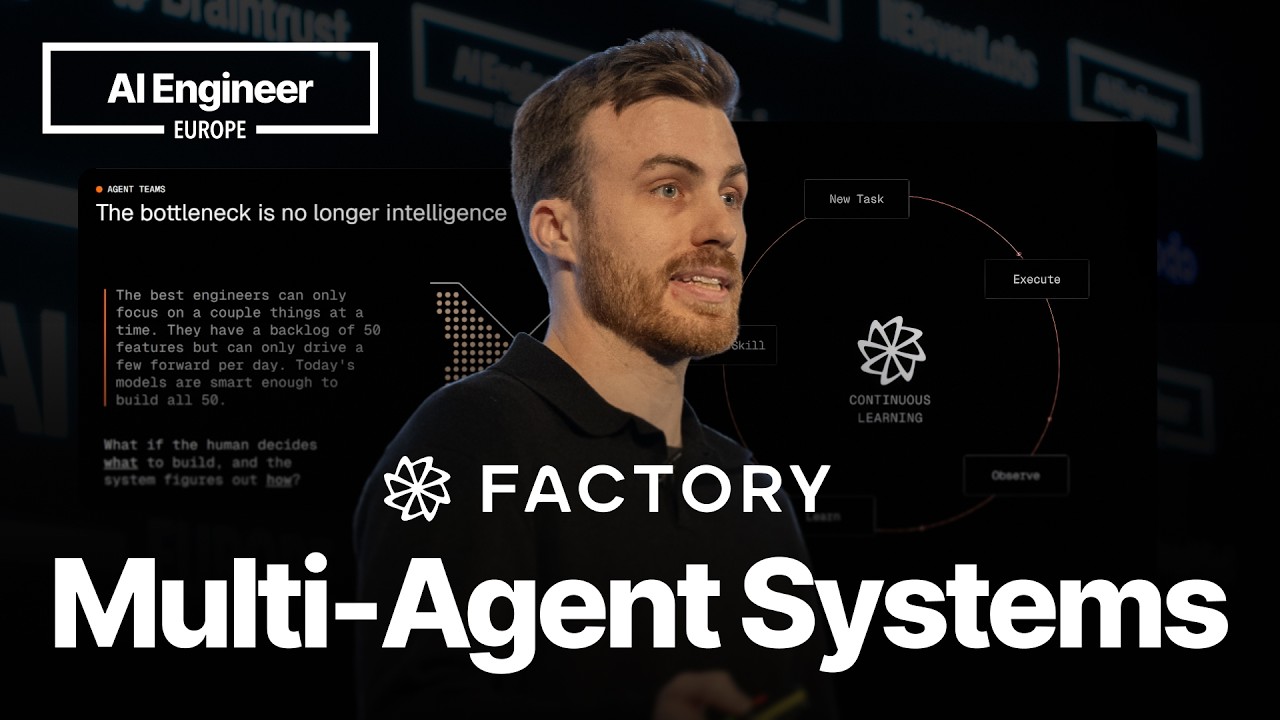
The Multi-Agent Architecture That Actually Ships — Luke Alvoeiro, Factory
May 6, 2026 · 18:31
Luke Alvoeiro from Factory presents Missions, a multi-agent architecture that combines delegation, creator-verifier, broadcast, and negotiation into a three-role system of orchestrator, workers, and validators. The central claim is that human attention, not AI intelligence, is now the bottleneck in software engineering. Missions uses validation contracts written before any code to define correctness independently, structured handoffs to maintain context across 16-day runs, and serial execution with targeted internal parallelization to reduce errors. Strategic model selection per role—planning, implementation, validation—compounds advantages across model generations. Production data from building a Slack clone shows 60% of time and tokens spent on implementation, validation never succeeds on first go, and 50% of final code lines are tests with 90% coverage. The system is designed to improve with each model release by keeping orchestration logic in prompts and skills rather than hard-coded state machines.
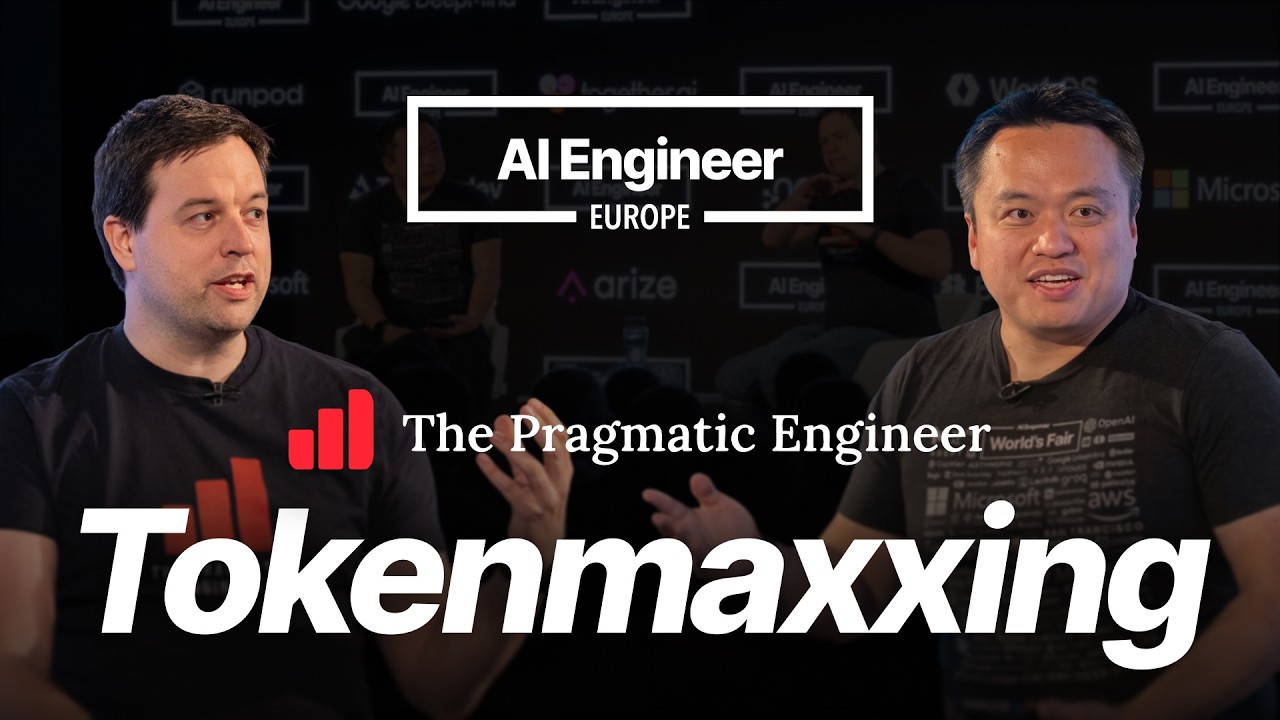
How AI is changing Software Engineering: A Conversation with Gergely Orosz, @pragmaticengineer
Apr 21, 2026 · 26:42
Gergely Orosz explains how AI is reshaping software engineering, from token maxing at Meta, Microsoft, and Salesforce—where engineers use AI tools to inflate token counts out of fear of layoffs and performance reviews—to the broader shift in the engineer's role toward orchestrating agents rather than managing people. He notes that big tech companies like Uber, Airbnb, and Shopify are building custom internal AI infra (MCP gateways, coding agents) to stay ahead, even tolerating high churn for a six-month competitive edge. Shopify secured GitHub Copilot a year early by offering feedback from 3,000 engineers. Gergely also shares how The Pragmatic Engineer hit product-market fit: 100 paid subscribers before publishing, reaching 1,000 in six weeks, and becoming the #1 paid tech newsletter by focusing on two deep-dive articles per week for two years.

Your MCP Server is Bad (and you should feel bad) - Jeremiah Lowin, Prefect
Jan 12, 2026 · 54:33
Jeremiah Lowin, CEO of Prefect and creator of FastMCP, argues that most MCP servers are poorly designed because they are simply REST API wrappers, leading to confused LLMs and wasted tokens. He presents a framework for agent-native product design based on three dimensions—discovery, iteration, and context—and offers five actionable principles: outcomes over operations, flatten arguments, treat instructions as context, respect the token budget, and curate ruthlessly. Lowin emphasizes that agents fail when given too many tools or complex arguments, citing a hard limit of 50 tools per agent for reliable performance. He shares real-world examples, including a company with 800 endpoints that could not be effectively exposed, and critiques client implementations like Claude Desktop for not respecting spec-compliant features. The central takeaway: MCP servers should be designed as user interfaces for agents, not as developer APIs.
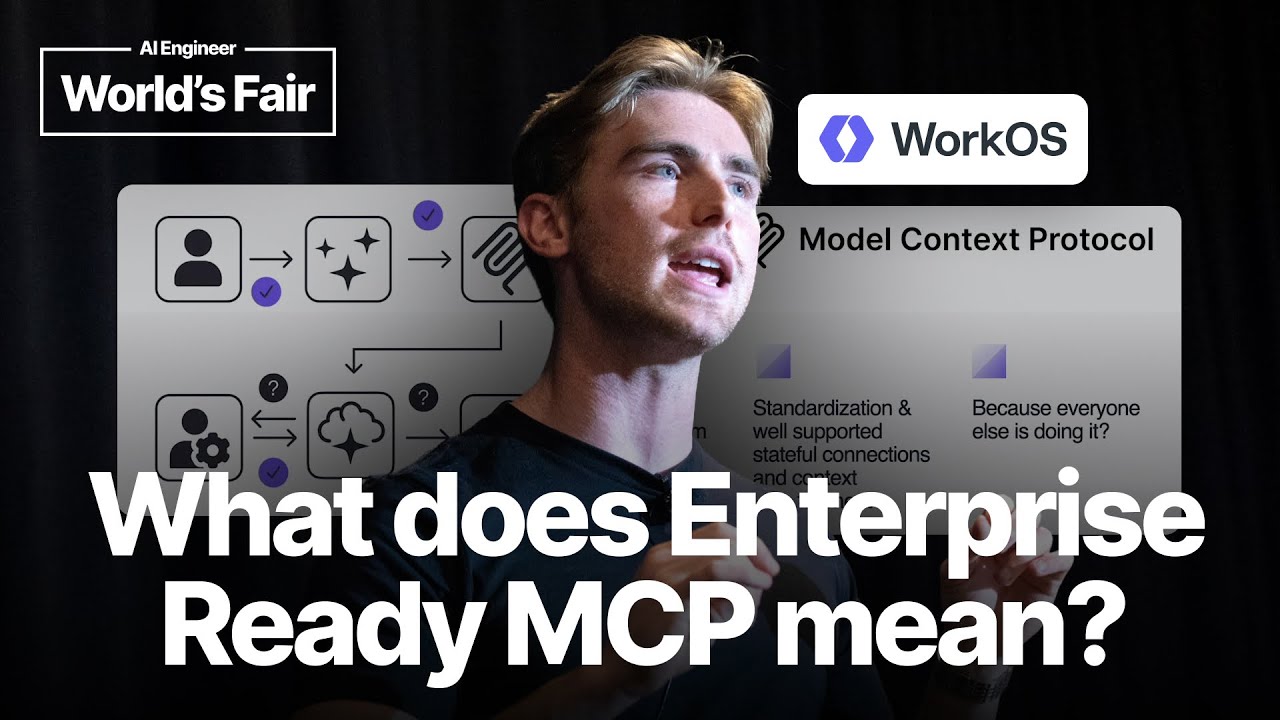
(possible dupe but better sound) What does Enterprise Ready MCP mean? — Tobin South, WorkOS
Jun 27, 2025 · 13:53
Tobin South from WorkOS explains what it takes to make Model Context Protocol (MCP) enterprise-ready, covering the full journey from a hacky local server to a production system with authentication, authorization, SSO, audit logs, and data loss prevention. He demonstrates buying a shirt via MCP live, highlighting the need for bot blocking, input validation, and adapting auth stacks for dynamic client registration. South also discusses open challenges like headless auth for remote asynchronous workloads and communicating scope between AI agents, emphasizing that authorization is the hardest part of scaling MCP to the enterprise.

Building Agents with Model Context Protocol - Full Workshop with Mahesh Murag of Anthropic
Mar 1, 2025 · 1:44:12
Mahesh Murag of Anthropic presents the Model Context Protocol (MCP) as an open standard that replaces fragmented integrations with a single protocol for connecting AI systems to data sources, enabling context-rich AI applications and agentic experiences. He explains MCP's philosophy, inspired by APIs and LSP, and its three interfaces: tools (model-controlled), resources (application-controlled), and prompts (user-controlled). Murag highlights adoption with over 1,100 community-built servers and official integrations from companies like Cloudflare and Stripe. He demonstrates building agents with MCP using the MCP-Agent framework, showing how agents can use tools dynamically and composably across hierarchical systems. Future plans include remote server support with OAuth 2.0, a centralized registry for discovery and verification, and enabling agents to self-evolve by dynamically finding new capabilities via registry search.
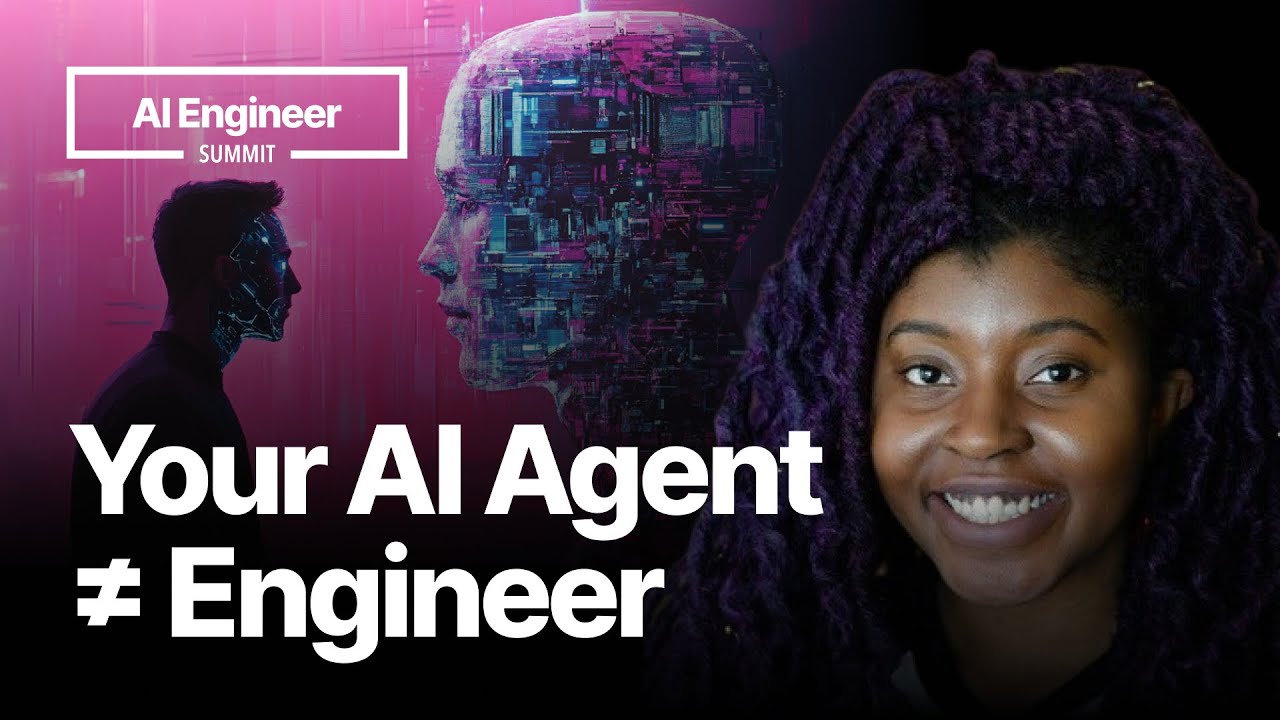
Your AI Agent Isn't an Engineer: The Art of Thoughtful Anthropomorphism
Feb 22, 2025 · 20:20
Rizel Scarlet, a staff developer advocate at Block, argues that marketing AI agents as "software engineers" creates unrealistic expectations and alienates developers. She explains that such anthropomorphism—attributing human traits to AI—stems from lazy marketing to executives, but it backfires by making developers feel threatened and discrediting products when AI fails to meet human-level performance. Citing a Wired article, she notes 52% of game companies have adopted generative AI, yet 30% of surveyed developers expressed negative sentiment. To build trust, she proposes a framework: understand how AI works (e.g., the agentic loop), use non-human names like "copilot" (pioneered by GitHub), focus on augmentation over replacement, be transparent, give developers control, show real demos (including live troubleshooting), provide clear documentation, and foster open collaboration (e.g., Cursor.Directory). The episode reframes AI as a tool to work in parallel, not a replacement.
Powered by PodHood