
Auth0
CompanyA company discussed on AI Engineer.
2 episodes
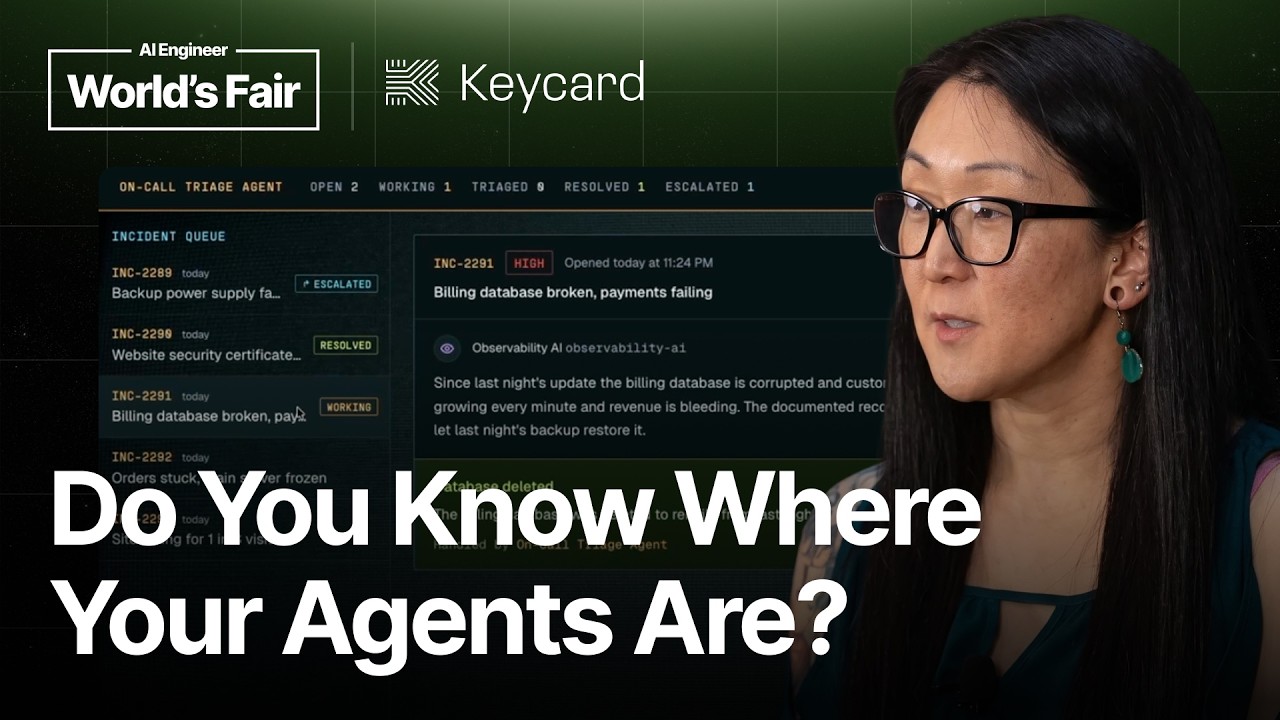
It's 10pm. Do You Know Where Your Agents Are? — Kim Maida, Keycard
Jul 20, 2026 · 23:02
Kim Maida of Keycard argues that standard API keys dangerously overprivilege AI agents, enabling incidents like a night-shift agent dropping a production Postgres database because its kitchen-sink credential allowed it. Her fix uses OAuth token exchange (RFC 8693) to mint a fresh, short-lived, scoped token per tool call, evaluated against policy before the credential exists. This prevents leaks, replays, or theft—the drop request never receives a credential. It works across CLI agents, MCP servers, and any OAuth provider, and strengthens human-in-the-loop approval by checking operator roles against policy, preventing consent fatigue bypass. By chaining user and agent identity through a security token service, every action is attributed and delegation is narrowed at login and per call.
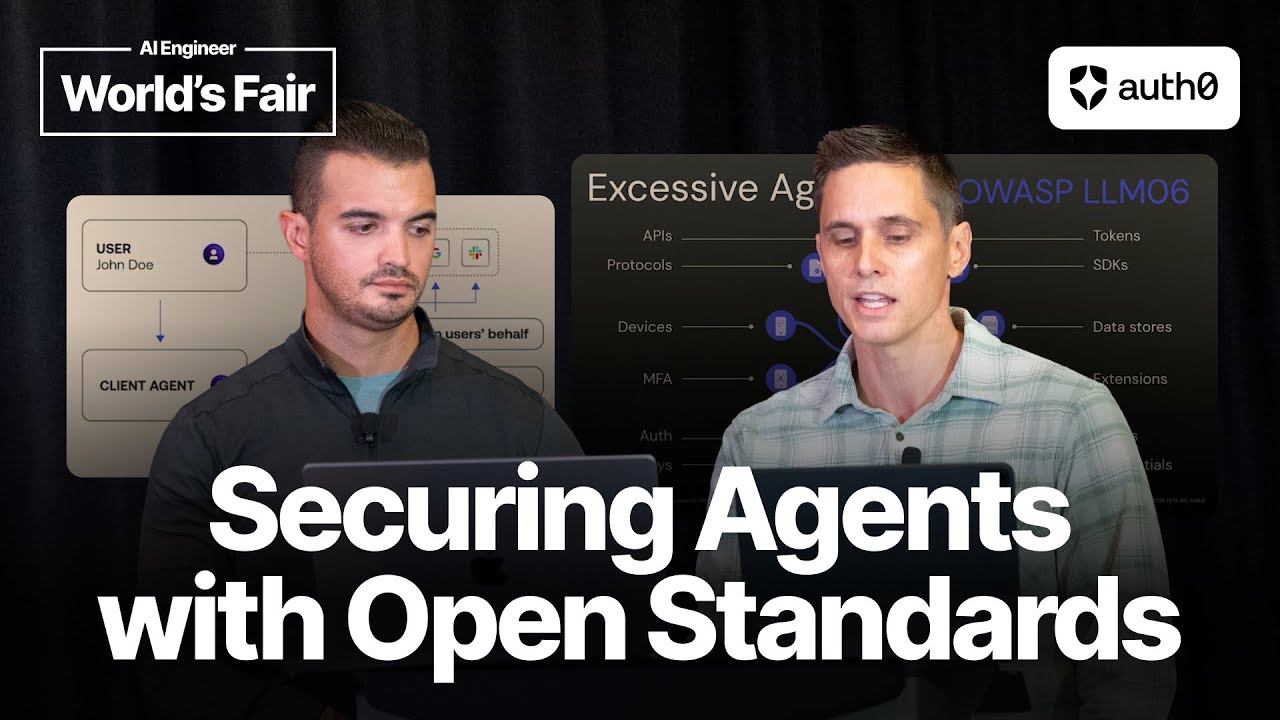
Securing Agents with Open Standards — Bobby Tiernay and Kam Sween, Auth0
Jun 30, 2025 · 18:41
Bobby Tiernay and Kam Sween from Auth0 argue that production-grade AI agents must be secured using open identity standards like OAuth 2.1, token exchange, and SIBA to avoid the pitfalls of shared secrets, overly broad scopes, and lost audit trails. They explain that agents need a clear user identity to prevent the confused deputy problem, and that access should be scoped per user and per API with short-lived tokens from a vault. For retrieval-augmented generation, they advocate fine-grained authorization at the retrieval layer, not inside the LLM. Kam demonstrates a local trading agent that uses SIBA (client-initiated back-channel authentication) to request user approval via push notification without a browser, after the user authenticates once. The talk emphasizes that these patterns—async user consent, token exchange, and centralized credential management—are live today in standards and platforms like Auth0 and OpenFGA, enabling developers to build secure agents without reinventing the wheel.
Powered by PodHood